2026 Top Aluminum MIG Welders for Sale Worldwide
Choosing an Aluminum Mig Welder for 2026 means looking beyond a polished product photo or a bold amperage rating. Aluminum transfers heat quickly, and its soft wire can buckle inside a poorly matched feed system. On a real shop floor, a worn liner, damp spool, or dirty joint can turn a promising setup into bird-nesting and uneven beads. Small details matter.
Welding researcher John C. Lippold has studied how materials and heat affect weld performance. A practical paraphrase of that expertise is: “For aluminum, control the heat and protect the wire path; machine power alone does not guarantee a sound weld.” Buyers should compare AC or DC capability where relevant, pulse modes, spool-gun compatibility, drive-roll design, duty cycle, and available service support. The right combination depends on material thickness, work volume, and operator experience.
This guide reviews 2026 aluminum MIG welders for sale worldwide, with attention to features that matter in daily use. It considers compact machines for repair work, higher-output systems for fabrication, and the accessories that influence feeding consistency. A specification sheet can look convincing. The workshop tells more.
No single model suits every buyer. Regional voltage, consumable availability, and warranty terms can change the value of an otherwise capable welder. Those details are easy to overlook, and this guide may not capture every local difference. Use the comparisons as a starting point, then verify the manufacturer’s current specifications and support options before purchasing.
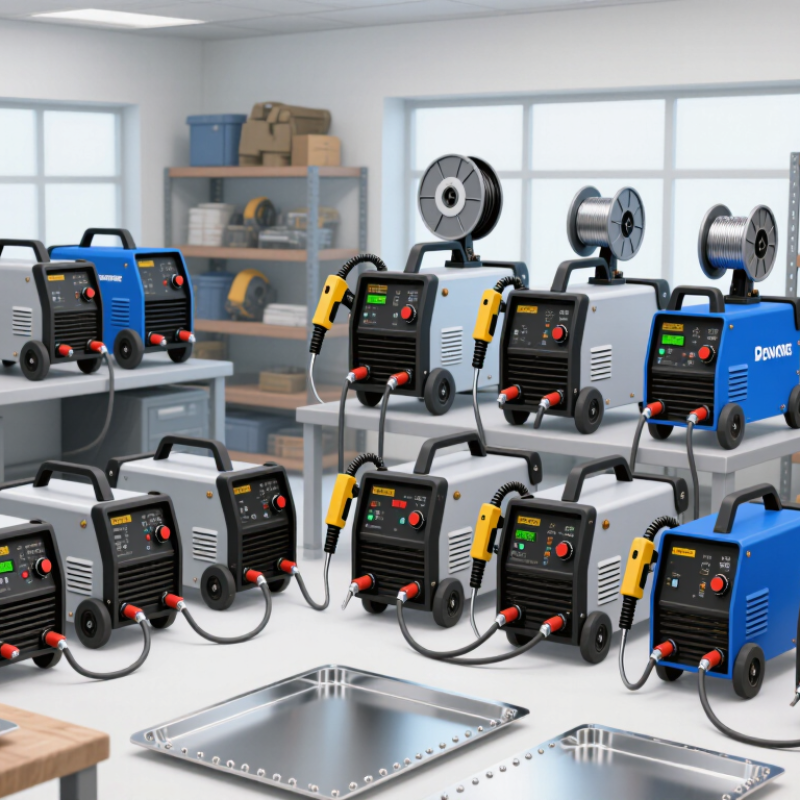
How MIG Welding Works with Aluminum
How MIG Welding Works with Aluminum
Aluminum MIG welding feeds a soft aluminum wire through a torch while an electric arc melts the wire and workpiece. Shielding gas, usually argon, protects the molten pool from air. The power source maintains the arc as the wire advances, but aluminum’s high thermal conductivity quickly carries heat away. It can also warp before the weld looks finished. That surprises new welders.
The oxide layer on aluminum melts at a much higher temperature than the metal beneath it. Clean the joint with a dedicated stainless-steel brush and remove oil before welding. Use a spool gun or push-pull system when long wire paths cause feeding problems; soft wire can buckle inside the liner. Match wire size, voltage, and feed speed to the material thickness. For thin sheet, pulsed MIG can help control heat and reduce burn-through. A test bead on scrap is still essential.
Tips: Keep the torch angle steady and the contact tip close to the work. Watch the puddle, not just the arc. If the bead looks cold or uneven, pause and check cleaning, settings, and wire feeding. Small adjustments matter. Aluminum can be less forgiving than it first appears.
2026 Top Aluminum MIG Welders for Sale Worldwide — How MIG Welding Works with Aluminum
In MIG welding, a continuously fed wire electrode carries current and melts to form the weld, while shielding gas protects the molten metal. These typical starting current ranges illustrate how thicker aluminum generally requires higher current. Actual settings depend on the alloy, wire diameter, joint, welding position, and equipment; always follow the welder and filler-metal recommendations and test on scrap.
Key Features of Aluminum-Capable MIG Welders
Key Features of Aluminum-Capable MIG Welders
Aluminum wire feeds poorly through long, curved liners because it is soft and easy to buckle. A spool gun or push-pull torch reduces the distance the wire travels. Look for smooth four-roll drive, U-groove rollers, and a low-friction liner. Small details matter. For thin sheet, adjustable pulse control can limit heat buildup and reduce burn-through. A stable arc also helps keep the bead even across changing joint gaps.
Check the machine’s rated output, duty cycle, and available input power against your materials and workload. A high amperage figure alone says little about how long the welder can run before cooling. For aluminum, confirm compatibility with suitable wire sizes and an argon shielding-gas setup. AWS’s 2023 welding workforce data analysis projected that the United States could need about 360,000 additional welding professionals by 2027, underscoring the value of clear controls and repeatable settings for training and production. Still, preset programs are not a substitute for test welds: alloy, thickness, fit-up, and travel speed all change the result. A useful machine makes those adjustments practical, not automatic.
Top Aluminum MIG Welder Models Available Worldwide in 2026
In 2026, the most useful aluminum MIG welder models worldwide fall into four practical groups: compact spool-gun machines, push-pull systems, synergic pulse units, and industrial multiprocess welders. Availability and electrical input differ by region, so check local voltage, wire-feed components, and service support before comparing prices. Small details matter.
The International Aluminium Institute’s 2024 outlook projects global aluminum demand rising from about 86 million tonnes in 2020 to 119 million tonnes by 2030. That growth makes dependable joining equipment increasingly relevant across transport, construction, and fabrication. For occasional repairs, a spool-gun setup can reduce soft-wire feeding problems. Push-pull systems suit longer torch reach, while pulse MIG models offer closer control of heat input on thinner sheet. Industrial units make sense for repeated production work, but their higher cost may be difficult to justify in a small shop.
MarketsandMarkets estimated the global welding equipment market at USD 15.5 billion in 2023 and forecast USD 20.8 billion by 2028. This broad category includes more than aluminum MIG equipment, so it is useful context, not a direct sales ranking. I would not treat any worldwide “top model” list as universal: duty cycle, wire diameter, and repair access can change the best choice. Check them against the actual job.
How to Compare Power, Duty Cycle, and Performance
For 2026 aluminum MIG welder comparisons, look beyond the headline amperage. Check rated output at the voltage and wire-feed speed you expect to use, then confirm the machine’s input voltage, phase, and frequency suit your workshop. Supply standards vary worldwide. A high maximum output is useful only if the power supply can support it.
Duty cycle shows how long a welder can run before cooling. IEC 60974-1:2017 uses a 10-minute rating period under specified thermal conditions: a 60% rating means six minutes welding and four minutes resting at the stated output. Compare ratings at the same amperage; percentages at different outputs are not equivalent. The AWS Welding Handbook describes aluminum’s high thermal conductivity, which helps explain why joint thickness, fit-up, and travel speed affect heat needs. The rating alone cannot predict a clean bead.
Tips: Test on scrap of the same alloy and thickness. Watch for wire feeding, arc stability, and heat buildup at the joint. A short test can expose a poor setup. Recheck the machine’s input requirements before buying, especially when sourcing equipment for another region.
Global Purchasing, Compatibility, and Safety Considerations
For global purchases, compare more than amperage and advertised duty cycle. The International Aluminium Institute reported approximately 70.6 million tonnes of primary aluminum production in 2023, reflecting the material’s broad industrial use. Yet a welder that performs well in one workshop may not suit another country’s power supply. Confirm input voltage, phase, frequency, plug type, and circuit capacity before ordering. A mismatch can mean costly rewiring or an unusable machine. Check whether the package supports a spool gun or push-pull torch, and whether its drive rolls and liner suit soft aluminum wire. Small details matter.
Ask for the full technical manual and a written list of included accessories. Also verify local service support, replacement-part availability, and the stated duty cycle under the exact test conditions. Aluminum transfers heat quickly; clean base metal, suitable shielding gas, and steady wire feeding all affect weld quality. Keep the setup practical. For safety, plan local exhaust ventilation, suitable eye and skin protection, and safe cylinder handling. The International Agency for Research on Cancer classified welding fumes as carcinogenic to humans in Monographs Volume 118. That finding deserves attention, even when work is occasional. Buyers sometimes focus on shipping cost and overlook extraction equipment. That is an easy mistake to make, and worth reviewing before a purchase.