
10 Best Carton Suction Cups for Packaging Buyers?

A carton can look uniform on a conveyor and still challenge a suction cup. Coated board, dusty seams, crushed corners, and changing carton weights all affect grip. For packaging buyers, choosing a Carton Suction Cup is not just a matter of diameter. Lip shape, rubber compound, vacuum level, and release speed matter too. Small details show up fast. A missed pickup can pause a line or leave a carton skewed at the next station.

The International Federation of Robotics reported 541,302 industrial robots installed worldwide in 2023 in its World Robotics 2024 report. That figure describes broad factory automation, not carton suction cups specifically, but it shows why reliable end-of-arm tooling matters. IFR President Marina Bill said, “The new World Robotics report shows that the number of robots used in factories around the world is at an all-time high.” The quote is about robotics overall, not vacuum handling. Still, it gives useful context for buyers reviewing automated packaging equipment.

This guide compares 10 carton suction cup options through practical buying questions: Will the cup seal on porous or printed board? Can it tolerate repeated cycles? Does it release cleanly without denting a light carton? A catalogue specification cannot answer every question. Real cartons vary by supplier, coating, and storage conditions. That is the imperfect part. Buyers should validate shortlisted cups on their own line, using actual cartons and production speeds. The best choice is the one that holds consistently, releases on cue, and keeps working after the first neat test.
10 Best Carton Suction Cups for Packaging Buyers?

What Carton Suction Cups Are and How They Work

Carton suction cups are soft contact parts fitted to packaging machines or robotic grippers. Their lips press against a carton, then a vacuum source removes air beneath the cup. The pressure difference holds the carton during lifting or movement. That seal matters. A flexible lip can conform to small surface irregularities, but it cannot fix every problem.

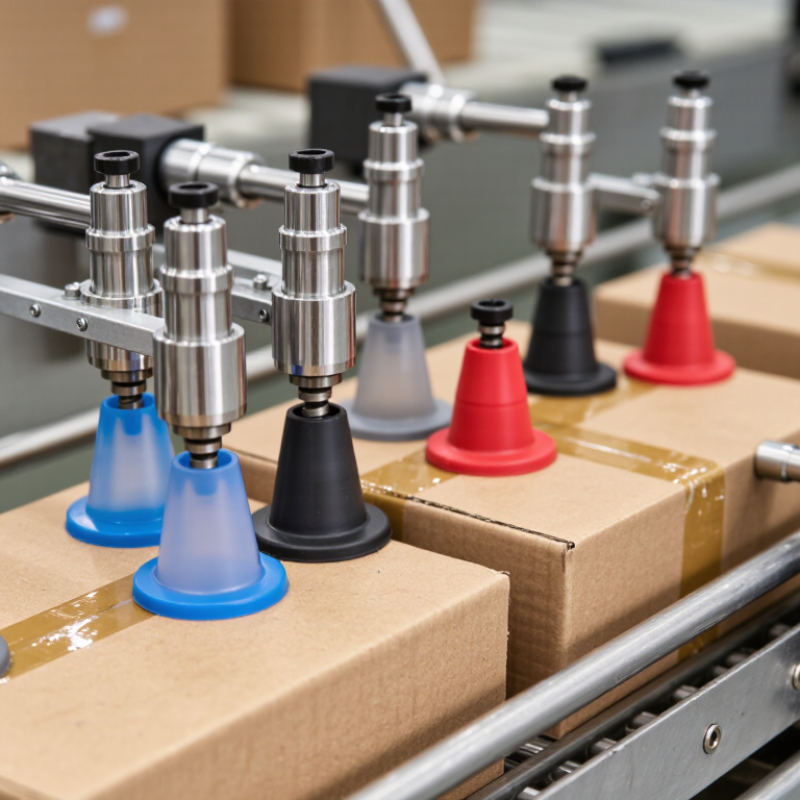
Cup shape and material affect grip. Flat cups suit smooth, even panels, while bellows-style cups can absorb small height changes. Dust, crushed corners, glossy coatings, and porous cardboard may weaken the seal. A cup that works well on one carton can slip on another. Packaging conditions vary more than they first appear.

Tips: Test cups on actual cartons, not just clean samples. Check grip with empty and filled boxes, and watch for slipping near seams or damaged edges. If vacuum levels fluctuate, inspect the cup lip and hose connections before changing the robot’s settings. One test may not be enough. Carton surfaces can change between production batches.

10 Best Carton Suction Cups for Packaging Buyers? — What Carton Suction Cups Are and How They Work

This chart shows the ideal theoretical holding force for different suction cup diameters at a pressure difference of 60 kPa. Values are calculated using F = ΔP × π × (d ÷ 2)². Actual grip on cartons can be lower because corrugated and porous surfaces may leak air.

Note: These are calculated ideal forces, not product ratings. Choose cups based on carton surface, load, vacuum level, and an appropriate safety factor, then validate them in your application.

Key Features That Shape Carton Suction Cup Performance

10 Best Carton Suction Cups for Packaging Buyers?

Key Features That Shape Carton Suction Cup Performance

Carton suction cup performance depends on more than diameter. Cup material, lip shape, and vacuum level all affect how reliably a cup grips a box. Corrugated cartons can leak air through porous surfaces, while glossy coatings may reduce friction. A flexible lip can help seal uneven seams. Too soft, though, and it may deform under load. Small details matter.

Tips: Test cups on the cartons you actually use. Include dusty, creased, and partly filled boxes. Watch for slipping during acceleration, not just during a stationary lift. A quick bench test is useful, but it cannot reproduce every line condition.

Consider cup spacing and the robot’s approach angle, too. A wider grip may stabilize a large carton, but it can miss narrow panels or interfere with flaps. Match the cup’s load rating to the carton’s weight, then allow for changes in speed and surface quality. One assumption worth questioning: the largest cup is not always the safest choice. It may need more vacuum and can mark lightweight packaging. Keep spare cups available, and inspect lips for cuts or flattening. Small wear can cause inconsistent picks before a complete failure becomes obvious.

Ten Carton Suction Cups for Different Packaging Needs

10 Best Carton Suction Cups for Packaging Buyers?

Ten Carton Suction Cups for Different Packaging Needs

Carton suction cups vary in shape, softness, and sealing area. A flat cup suits smooth, coated cartons; a single-bellows cup adapts to slightly uneven panels. A multi-bellows cup handles greater height variation, while an oval cup fits narrow carton faces. Large-diameter cups spread grip across broad panels; small cups fit tight spaces. Foam-lip cups can seal rough corrugated surfaces, and high-friction cups help resist sliding. Soft-lip cups are gentler on printed cartons. Multi-cup arrays support large boxes, while deeper bellows cups can compensate for changing carton heights. Fit matters.

The International Federation of Robotics’ World Robotics 2024 report recorded 541,302 industrial robot installations in 2023 and 4.28 million robots operating worldwide. These figures show the scale of automation, but they do not specify which cup works best on a carton.

Buyers should test the actual board, surface coating, carton weight, and pickup speed. For porous corrugated board, check whether the vacuum source can maintain grip despite leakage. A cup that holds a sample slowly may fail on a fast line. One limitation remains: catalog descriptions cannot replace a line trial. Even small carton changes can affect sealing.

How to Compare Cup Materials, Sizes, and Grip Strength

Carton suction cup selection starts with the surface. Smooth coated boxes often seal with standard rubber cups, while recycled or dusty corrugated board may need soft, wide lips or foam seals. Nitrile rubber suits many general handling tasks; silicone can tolerate higher temperatures, but may wear faster in abrasive conditions. Check the supplier’s material data against your actual cartons.

Cup diameter affects holding force: a larger effective area can create more lift, but only if the rim seals. Bellows cups help with uneven stacks and modest height changes. The International Federation of Robotics reported 541,302 industrial robot installations worldwide in 2023 in its World Robotics 2024 report. That wider automation trend makes reliable gripping important, yet the report does not prescribe carton-cup specifications. In practice, porosity, print texture, and changing carton quality can defeat a tidy calculation. Test samples from real production lots.

Tips: Start with the smallest cup that lifts the carton reliably, then test at the fastest planned cycle. Watch for corner lifting, slow release, and vacuum loss. A brief test. Recheck after dust builds up; that part is easy to overlook.

How to Choose and Maintain the Right Carton Suction Cup

10 Best Carton Suction Cups for Packaging Buyers?

How to Choose and Maintain the Right Carton Suction Cup

Choosing a carton suction cup starts with the carton, not the catalog. Check whether its surface is coated, dusty, ribbed, or slightly porous. A smooth, sealed box may grip with a smaller cup, while rough recycled board can let air leak around the lip. Measure the heaviest carton and consider acceleration, not just its resting weight. Leave a safety margin.

Cup diameter, material softness, and vacuum level should match the pick speed and carton shape. If cartons vary by supplier, test several real samples before choosing a design. One successful lift proves little.

During routine checks, look for flattened lips, tiny cuts, trapped fibers, and hardened surfaces. Small details matter. Wipe cups with a compatible, lint-free cloth, and use solvents only when the material supplier confirms they are safe. Inspect hoses and filters too; a clean cup cannot compensate for a restricted line.

Track missed picks and carton drops by shift, since patterns may reveal a leak or worn edge. Replace damaged cups promptly, but confirm the replacement fits the holder and vacuum circuit. Operators may raise vacuum to hide poor contact, yet that can waste energy without fixing unreliable handling. After any change, run a short trial with actual cartons. There is no perfect setting for every box, and yesterday’s setting may not suit today’s load.