
7 Best Scattering Laminating Machines for Buyers?
A Scattering Laminating Machine can add a textured, light-catching finish to printed materials, but the right model depends on more than its advertised speed. Buyers should compare the materials they actually run, including paper weight, sheet size, film type, and daily production volume. A machine that handles a sample beautifully may behave differently during a long production shift. Small details matter.
This guide examines seven options through practical buying criteria: operating range, feeding method, temperature control, adjustment needs, footprint, and available support. These details help explain whether a model suits a print shop, packaging line, or occasional finishing work. We also consider setup demands and maintenance, since rollers, feed alignment, and consistent heat can affect finish quality. Specifications are useful, but they do not tell the whole story. A product page may omit noise, warm-up time, or the learning curve. Those gaps deserve a closer look.
Use the comparisons as a shortlist, not as a substitute for checking current manufacturer documentation and asking suppliers about your exact substrate. If possible, request a sample run before committing. Check how the finish looks under real lighting, and inspect edges for bubbles or uneven coverage. There is no universal winner. The best choice is the machine that reliably matches your materials, workload, budget, and staff experience, even if its headline speed is not the highest. One caveat: model availability and specifications can change, so verify them before purchase.
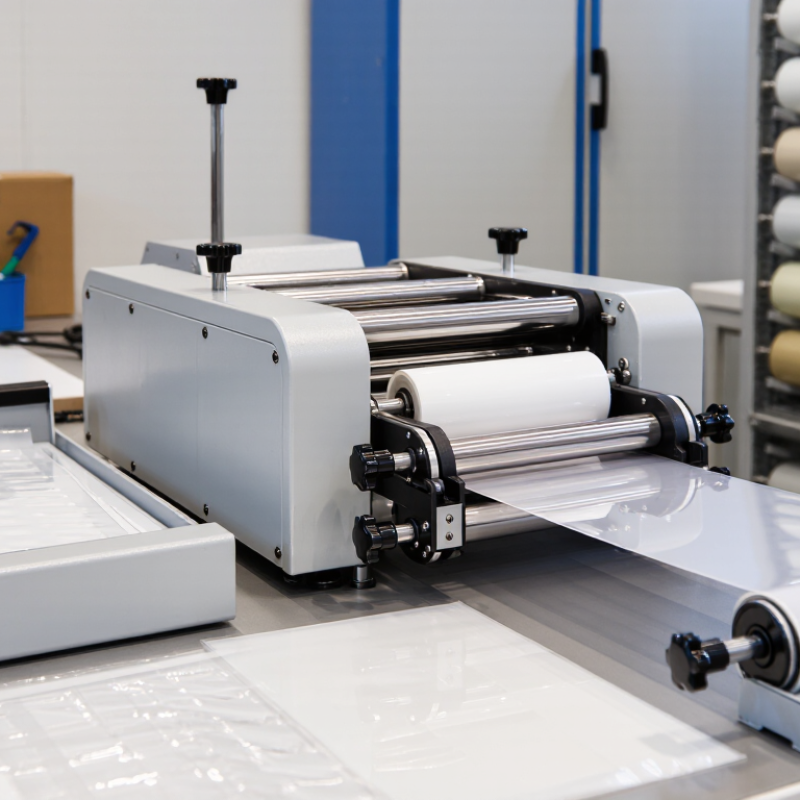
Define Scattering Lamination and Key Metrics: Width (mm) and Speed (m/min)
Scattering lamination distributes adhesive particles, often thermoplastic powder, across a moving fabric or film. Heat softens the particles, and pressure helps bond a second layer. The result depends on even coverage, stable heating, and suitable pressure. Missed spots or clumps can weaken the bond. Small details matter.
Two key specifications are working width, measured in millimetres, and line speed, measured in metres per minute. Width indicates the material size the machine can process; compare it with your actual roll width, not just the finished product. Speed describes material movement, but it does not guarantee output quality. A faster line may need more precise powder control or longer heating capacity. A spec sheet alone can mislead.
Tips: Ask for a trial using your own material. Check edge coverage, bond consistency, and powder waste at your planned speed. A wider machine is not automatically better. Leave room for setup changes; real production rarely matches a perfect sample.
7 Best Scattering Laminating Machines for Buyers? – Define Scattering Lamination and Key Metrics: Width (mm) and Speed (m/min)
What is scattering lamination? Scattering lamination applies a measured layer of thermoplastic adhesive powder to a substrate. Heat melts or activates the powder, bonding the substrate to another layer; cooling then helps set the laminate. The process is used for suitable textiles, nonwovens, foam, and other compatible materials.
Key metrics: Working width is the usable processing width, measured in millimeters (mm). Line speed is the web’s travel speed, measured in meters per minute (m/min). Actual output depends on the material, adhesive, coat weight, heating method, and bond requirements. The figures below are indicative configuration ranges, not specifications for individual products.
| Buyer Category | Typical Working Width (mm) | Typical Line Speed (m/min) | Common Application | What to Check |
|---|---|---|---|---|
| 1. Compact pilot line | 300–800 | 1–10 | Adhesive trials, sampling, and small-batch development | Powder-feed consistency at low rates; ease of cleaning and changing materials |
| 2. Narrow textile line | 1,000–1,400 | 3–15 | Narrow fabrics, garment components, and specialty textiles | Edge-to-edge powder coverage; web guiding and tension control |
| 3. Standard textile line | 1,500–1,800 | 5–20 | Apparel, lining, and general textile bonding | Uniform coating across the width; compatible heating and cooling zones |
| 4. Wide nonwoven line | 2,000–2,400 | 5–20 | Nonwoven webs, hygiene-related materials, and technical laminates | Powder distribution across the full web; substrate tracking and heat uniformity |
| 5. Foam and textile laminating line | 1,500–2,200 | 3–15 | Foam-to-fabric and other heat-sensitive layer combinations | Temperature control, dwell time, and protection against substrate distortion |
| 6. High-throughput production line | 1,800–2,400 | 10–30 | Continuous production of compatible fabrics and nonwovens | Confirm the target bond quality at the required speed, not just maximum speed |
| 7. Extra-wide custom line | 2,500–3,200 | 3–15 | Wide-format technical textiles and large-area web processing | Machine footprint, cross-web temperature and coating uniformity, and roll handling |
Selection note: Compare machines using the same substrate, adhesive powder, target coat weight, and bond test. A higher rated speed does not necessarily mean higher usable production if the required heating, coating uniformity, or bonding performance cannot be maintained.
Compare 7 Machine Options by Adhesive Add-On (g/m²) and Output
7 Best Scattering Laminating Machines for Buyers?
Compare adhesive add-on and output before choosing a scattering laminating machine. The figures below are practical comparison ranges, not guaranteed specifications. Compact single-side units often apply 5–15 g/m² at 8–20 m² per hour. Bench models may handle 10–25 g/m², but usually produce only 5–15 m² per hour. Light roll-to-roll machines can manage 8–20 g/m² and 20–50 m² per hour. Mid-width, dual-roller models suit 15–35 g/m² applications, with output around 30–80 m² per hour. Precision-metering machines target thinner layers, about 3–12 g/m², at 15–45 m² per hour. Heavy-duty units may apply 25–60 g/m² at 20–60 m² per hour. High-output lines typically favor 10–30 g/m² and may reach 60–150 m² per hour.
Tips: Ask suppliers to test your actual film, substrate, and adhesive. Check coating uniformity across the full working width, not only the center. Request measured output at your required add-on weight; maximum speed alone can mislead. A sample may look fine under bright inspection lights, yet show weak edges after handling. That gap deserves attention. These ranges need verification against machine width, adhesive viscosity, curing conditions, and operator setup. Output can fall when changeovers or cleaning take longer than expected.
7 Scattering Laminating Machine Options: Adhesive Add-On vs. Output
Indicative operating points for common machine configurations. Actual adhesive add-on and line speed depend on the adhesive, substrate, web width, and process settings; confirm specifications with the equipment supplier.
Use the adhesive add-on axis to compare application weight (g/m²) and the output axis to compare line speed (m/min). Higher line speed may require adjustments to adhesive weight and curing conditions.
Assess Heating Zones (°C), Line Speed (m/min), and Power (kW)
Heating zones, line speed, and power should be assessed together, not as isolated figures. A machine may list several zones, but check whether each has independent temperature control. Record the set temperature and, where practical, verify the roller or plate surface with a calibrated probe. The displayed number is not always the temperature your material experiences. Heat matters.
Ask for the usable temperature range in °C and test it with your actual film, substrate, and adhesive. Then compare line speed in m/min at that setting. A higher speed can shorten heating time and weaken bonding, even when the control panel shows the target temperature. Watch a sample pass through: look for bubbles, edge lift, uneven gloss, or material distortion. Small changes in speed can reveal more than a brochure claim.
Check rated power in kW, but clarify whether it means installed load or typical operating demand. This affects electrical planning and running costs. Ask the supplier for power data during warm-up and steady production, plus the test conditions behind any quoted speed. I would not trust one impressive maximum-speed figure without a matching temperature and material specification. It is easy to compare machines on paper; real trials can still expose awkward gaps.
Verify Laminate Bond Strength Using ASTM D903 Peel Testing
When comparing laminating machines, do not rely on a glossy sample or a single strong pull. ASTM D903 provides a controlled method for measuring peel or stripping strength in adhesive bonds. Prepare consistent specimens from each machine’s output, keeping film, substrate, adhesive, and curing time the same. Small differences matter.
Use a calibrated tensile tester and follow the applicable method for specimen preparation, peel geometry, and test speed. Record the force across the peel, not just the highest reading. Note whether the adhesive separates cleanly, leaves residue, or tears the substrate. That failure pattern can reveal more than a number alone. Repeat tests across several samples; one unusually good strip proves little. Results also reflect materials and setup, not the laminator by itself.
Tips: Condition samples in the same environment before testing, and label every strip with its machine settings. Keep width and peel direction consistent. If readings vary, inspect pressure, temperature, and line speed before choosing a winner. The setup may still be imperfect, so document any deviations rather than hiding them.
Rank Machines by Substrate Fit, Changeover Time, Safety, and Cost
Rank laminators by the job they handle, not by maximum speed. The Flexible Packaging Association’s 2023 State of the U.S. Flexible Packaging Industry report estimated 2022 sales at $42.9 billion, up 4.9% year over year. That scale makes substrate waste and uptime meaningful buying costs. Fit matters. For paper and light board, rank compact thermal roll units first: simple changeovers, modest cost. Wide-format thermal models follow for larger sheets. Pouch laminators suit short runs, but feed setup can slow changeovers. Single-side roll machines fit routine work; double-side units suit two-sided jobs but need closer tension control.
For film-heavy, continuous production, rank solventless roll-to-roll machines higher when operators can manage precise web tension and adhesive settings. Multi-ply, high-speed lines rank last for smaller shops: capable, but costly to install and slower to change over. Ask suppliers to run your actual substrates, including the thinnest film and heaviest board. Time the change from one job to the next, including cleaning and roll loading. Check guards, emergency stops, and access around heated rollers before comparing quotes. PMMI’s packaging-machinery research tracks labor and operational pressures across the sector; still, a fast machine can be the wrong choice if one operator cannot safely handle its rolls. I would not treat these rankings as fixed: a frequent material change can outweigh a higher rated speed.