Why Choose Aluminum Industrial Profiles for Your Projects?
In today's industrial landscape, the choice of materials can make or break a project. Aluminum Industrial Profiles are increasingly popular among engineers and project managers. They offer a balance of strength, weight, and versatility that traditional materials struggle to match.
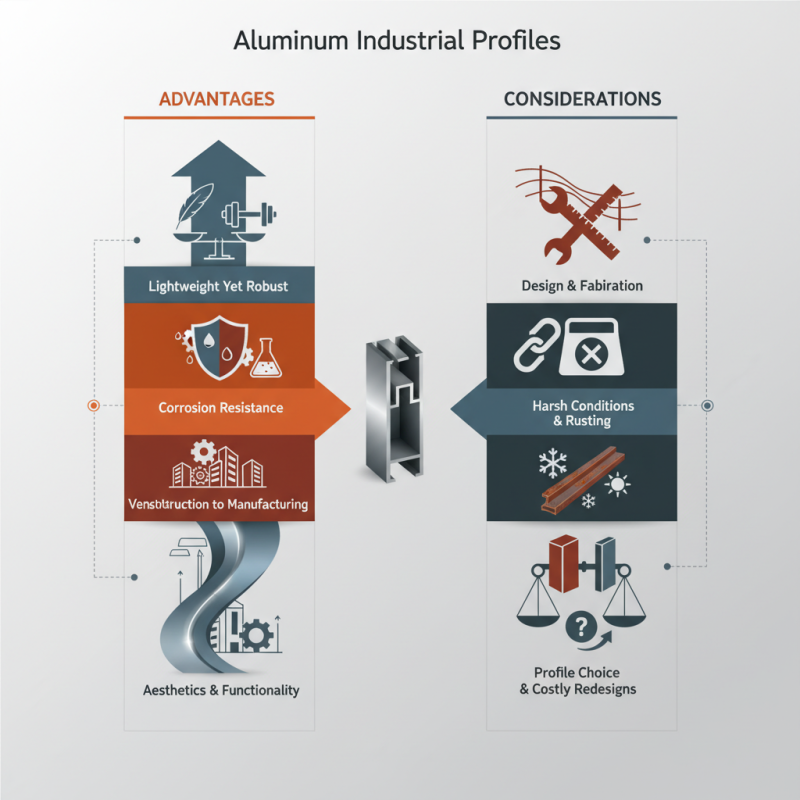
Aluminum Industrial Profiles are lightweight yet robust. They provide excellent corrosion resistance, making them ideal for various applications. From construction to manufacturing, they can adapt to diverse environments. Some users, however, may overlook the importance of proper design and fabrication techniques. This can lead to issues, such as constrained weight limits or rusting in harsh conditions.
Users often appreciate the aesthetics of Aluminum Industrial Profiles. They can enhance the overall look of structures while maintaining functionality. Yet, it’s essential to ensure that the chosen profiles align with project requirements. Thicker profiles may provide more strength but can weigh down projects unnecessarily. Balancing these factors is crucial for success, as the wrong choice can lead to costly redesigns.
Benefits of Aluminum Industrial Profiles in Various Applications
Aluminum industrial profiles are gaining popularity across various sectors. Their lightweight nature makes them ideal for projects where weight savings are critical. According to a report by the Aluminum Association, aluminum can be up to 60% lighter than steel while retaining similar strength. This feature allows for easier handling and installation, enabling quicker project turnovers.
In the automotive industry, aluminum profiles contribute to fuel efficiency. Research indicates that vehicles with aluminum components can improve fuel economy by up to 30%. This efficiency benefits not only manufacturers but also consumers seeking environmentally-friendly options. Moreover, aluminum's resistance to corrosion ensures longevity, reducing maintenance costs over time.
In construction, the versatility of aluminum profiles leads to innovative designs. Buildings using aluminum components show improved structural integrity. A study from the Global Aluminum Market estimates that the construction sector will witness a 2.5% annual growth rate. This growth reflects the increasing demand for sustainable and durable materials. However, challenges include cost fluctuations in raw materials, which could impact project budgets. It's essential for project managers to stay informed and adaptive to these trends.
Benefits of Aluminum Industrial Profiles in Various Applications
Comparative Analysis: Aluminum vs. Other Materials
When considering materials for industrial projects, aluminum stands out for several reasons. Its strength-to-weight ratio is impressive. Aluminum is lightweight, which can enhance efficiency during transport and installation. This property can lead to lower labor costs, a crucial factor in project budgeting. In contrast, materials like steel tend to be heavier and require more robust support structures.
Durability is another factor in the comparative analysis. Aluminum resists corrosion naturally. It can withstand harsh environments without rusting. This longevity reduces maintenance costs over time, a significant benefit for long-term projects. On the other hand, steel requires protective coatings to prevent corrosion, adding to initial costs.
While other materials like plastic offer some advantages, they lack aluminum’s mechanical strength. Plastics can degrade under UV light and extreme temperatures. This makes them less reliable for heavy-duty applications. However, the recyclability of aluminum is a significant plus, aligning with modern sustainability efforts. Evaluating these characteristics helps determine the best material for a specific project.
Key Characteristics of Aluminum Profiles for Industrial Use
Aluminum profiles are popular in industrial applications due to their unique characteristics. They are lightweight yet strong. This is an essential quality for structures that require durability without excessive weight. Their corrosion resistance adds to their longevity, reducing maintenance needs significantly. This feature is particularly valuable in environments where moisture and chemicals are present.
Another important aspect is their versatility. Aluminum profiles can be easily customized. They can be cut and shaped to fit various design requirements. This flexibility allows for innovative solutions in machine frames, conveyor systems, and workstations. However, working with aluminum requires some expertise. Proper techniques in welding and joining are necessary to ensure strength.
Conducting thorough research before selecting aluminum profiles is crucial. Understanding the specific needs of your project will help make informed decisions. Customization might involve higher initial costs, but the long-term benefits often outweigh these investments. Additionally, designers and engineers should consider potential limitations, such as thermal expansion. Planning for these factors can lead to more successful outcomes in industrial projects.
Cost-Effectiveness of Aluminum Profiles in Long-Term Projects
Aluminum profiles have gained significant traction in various industrial applications, primarily due to their cost-effectiveness in long-term projects. According to a recent industry report from the Aluminum Association, aluminum can reduce overall project costs by as much as 30% compared to traditional materials. This reduction stems from its lightweight nature, which decreases transportation and handling expenses.
Investing in aluminum profiles often translates to lower maintenance costs as well. Many projects benefit from aluminum's natural resistance to corrosion, enhancing durability and longevity. A study by the International Aluminum Institute found that structures using aluminum have a lifespan of 50 years or more with proper care. This durability minimizes the need for frequent replacements.
However, decision-makers should consider the initial investment. Aluminum can be more expensive upfront than steel or plastic. Weighing these factors is essential. Projects may suffer if short-term costs overshadow long-term benefits. Careful financial assessment will ensure more sustainable and effective project planning, reinforcing the overall productivity of aluminum profiles in the industrial sector.
Sustainability and Eco-Friendliness of Aluminum in Industry
Aluminum is increasingly recognized for its sustainability. It is abundant in the earth’s crust. This means it’s a resource that’s here to stay. Recycling aluminum uses only 5% of the energy needed for production. This drastically reduces carbon emissions. Many industries now prioritize eco-friendly materials. Aluminum industrial profiles fit this need perfectly.
Using aluminum in construction reduces waste. It is lightweight yet strong, minimizing transport emissions. Furthermore, it has a long lifespan, reducing the need for frequent replacements. However, the extraction process can be energy-intensive. There is ongoing debate about its overall environmental impact. Responsible sourcing is crucial for truly sustainable practices.
The ability to recycle aluminum repeatedly without degradation adds to its appeal. It closes the loop in product life cycles. This is vital for industries aiming for zero waste. While aluminum offers many benefits, careful consideration of its production is essential. The focus should be on developing methods that further enhance its eco-friendliness. This balance is pivotal for future advancements.