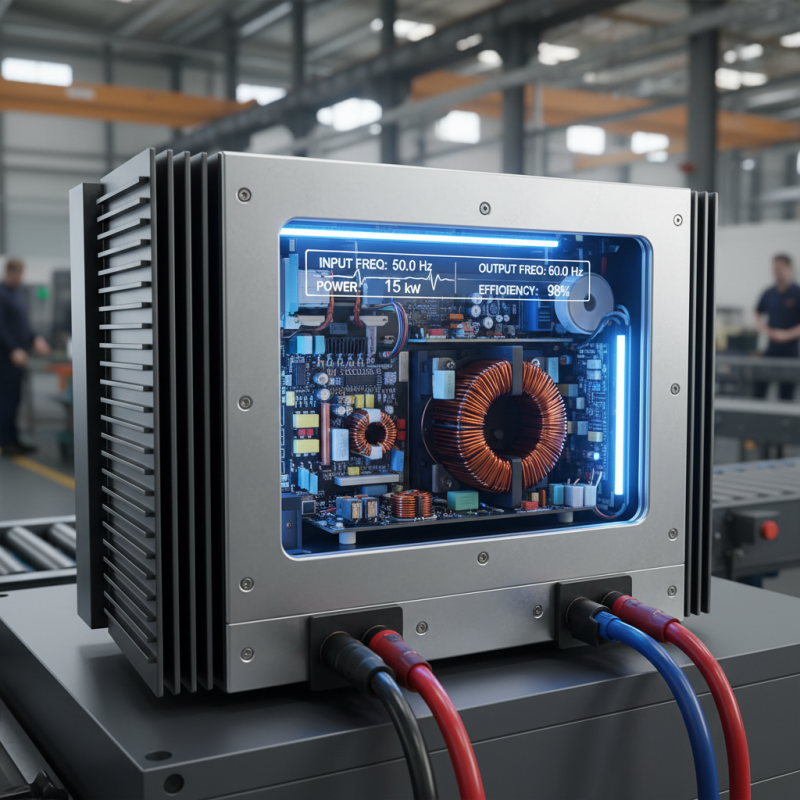
What is a Frequency Converter and How Does It Work?
A Frequency Converter is a crucial device in various industries. It changes the frequency of electrical power to meet specific needs. These converters allow for the efficient operation of equipment designed for different frequency standards.
In the world of manufacturing, for instance, machines often require a particular frequency to function optimally. A Frequency Converter adapts the incoming power to ensure that these machines work seamlessly. This not only enhances performance but also prolongs the lifespan of the equipment.
However, choosing the right Frequency Converter can be complicated. Users may encounter issues like compatibility and efficiency. Understanding how these converters work is vital for making informed decisions. The design and technology behind Frequency Converters play a significant role in achieving reliable performance.
What Is a Frequency Converter?
A frequency converter is a device that changes the frequency of an electrical signal. It adjusts the frequency to match the requirements of different devices or systems. This is essential for applications such as electric motors, which often operate efficiently at specific frequencies.
These converters come in various types, with the most common being static and rotary. Static converters are generally smaller and more efficient. They are used in applications where space and energy efficiency matter. Rotary converters, on the other hand, may offer better power handling for larger systems.
Understanding the function of a frequency converter is important for many industries. It enables flexibility in power control and ensures that equipment runs smoothly. However, not all converters are the same. Their efficiency can vary widely, and improper selection may lead to energy losses. These nuances are critical for professionals handling electrical systems.
Principles of Frequency Conversion Technology
Frequency conversion technology is essential in various industries, including energy and manufacturing. It allows for the adjustment of electrical frequencies, which can optimize equipment performance. According to a report by Research and Markets, the global frequency converter market is projected to reach $8.5 billion by 2026, indicating its growing importance in modern applications.
The principles behind frequency conversion involve several key methodologies. One common technique utilizes inverter-based systems to convert DC (direct current) into AC (alternating current) at the desired frequency. This process involves switching devices, often based on transistors, which can modulate voltage and frequency effectively. For instance, a frequency converter can enable an electric motor to operate at multiple speeds, enhancing efficiency and reducing energy waste. As noted in a study by the IEEE, the efficiency of modern converters can exceed 95%, demonstrating their reliability and effectiveness under various load conditions.
However, challenges remain in frequency conversion technology. Many converters produce harmonics, which can disrupt power quality. Mitigating these side effects demands careful design and consideration. Furthermore, there is ongoing research into enhancing the control strategies for frequency converters, which could lead to even higher performance. Industry professionals are exploring advanced algorithms to optimize the operation of converters, allowing for more adaptive and efficient systems in the future.
What is a Frequency Converter and How Does It Work? - Principles of Frequency Conversion Technology
| Parameter | Description | Typical Values |
| Input Frequency | The frequency of the incoming power supply | 50 Hz, 60 Hz |
| Output Frequency | The frequency of the output power supply after conversion | 0.5 Hz to 400 Hz |
| Efficiency | The efficiency of the frequency conversion process | 90% to 98% |
| Output Waveform | The shape of the output voltage waveform | Sine wave, Square wave |
| Control Method | The method used to control the output frequency and voltage | V/f control, Vector control |
| Applications | Common uses for frequency converters | Motor drives, Renewable energy systems, Industrial automation |
Types of Frequency Converters and Their Applications
Frequency converters play a crucial role in various applications, especially in industrial settings. They are used to adjust the frequency of electrical power supplied to equipment. Among the most common types are static and rotary frequency converters. Static converters are known for their compact design and efficiency in converting power without moving parts. They often find applications in telecommunications and IT. Rotary converters, on the other hand, are favored for heavy machinery demands, providing high reliability.
According to a recent report by Mordor Intelligence, the global frequency converter market is projected to grow at a compound annual growth rate (CAGR) of over 5% from 2021 to 2026. This growth is driven by increased demand in renewable energy sectors. Wind and solar power systems require specific frequency adjustments to stabilize output. Furthermore, frequency converters are essential in maritime applications, ensuring vessels can operate reliably across different ports with varying frequency standards.
While frequency converters offer significant advantages, there are challenges as well. Installation can be complex, requiring skilled technicians. Additionally, improper use may lead to inefficiencies, such as unnecessary heating or energy loss. It's crucial for operators to have thorough training and follow best practices. Regular maintenance checks can prevent performance issues. Balancing these factors is vital for optimizing their use in electrical systems.
How Frequency Converters Affect Motor Performance
Frequency converters play a vital role in motor performance. They adjust the frequency and voltage supplied to electric motors. By changing these parameters, converters help maintain optimal torque and speed in various applications. Thus, they enhance energy efficiency and extend motor life. Motors running at their rated frequency perform with precision. However, if not properly configured, motors may experience reduced performance or overheating.
One tip for improving motor efficiency with frequency converters is to ensure precise programming. Incorrect settings can cause inefficiencies. Regularly monitor motor temperature. Overheating can lead to damage over time. Adjusting the converter settings according to load can yield better performance.
Another thing to consider is the quality of the power supply. Fluctuations in input voltage can negatively affect motor operation. A stable voltage input allows the frequency converter to function optimally. When troubleshooting, always check connections and settings first. Regular maintenance on both the motor and the converter can help in sustaining performance levels. Keeping these aspects in mind can significantly improve the overall operation of the motor system.
Frequency Converter Impact on Motor Performance
This bar chart illustrates the performance differences of a motor when using a frequency converter versus operating without one. The metrics represented include motor speed, torque, efficiency, and input power. The data indicates that frequency converters significantly enhance motor performance across all measured dimensions.
Key Components of a Frequency Converter Explained
Frequency converters play a crucial role in modern power management. They alter the frequency of electric power sources. This process is vital for applications that require specific frequency levels, such as in motors and signal processing. Understanding the key components of these devices is essential for anyone interested in electrical engineering or energy systems.
One significant component of a frequency converter is the
input section. It rectifies the incoming alternating current (AC) into direct current (DC). This conversion provides a stable base for the next steps. Following this, an inverter transforms the DC back into AC at the desired frequency. Control mechanisms are also key. They ensure the output frequency matches operational needs. For effective operation, these components need to work seamlessly together.
Another important aspect is the filtering stage. This section smooths out any fluctuations in voltage or current. It enhances the quality of the output signal. Improper filtering can lead to inefficient operations. The entire system's design must consider possible losses and inefficiencies. Thus, engineers should be aware of potential pitfalls and areas for improvement.
Balancing performance and reliability is critical in frequency converter design.