
How to Choose the Right Reciprocating Compressor?
Choosing the right Reciprocating Compressor begins with understanding the process, not browsing a product catalog. The correct machine must match gas composition, suction pressure, discharge pressure, flow rate, temperature, and operating schedule. A compressor handling clean nitrogen differs greatly from one handling wet, corrosive, or particle-laden gas. Small details matter. A two-stage design may reduce discharge temperature and improve efficiency, while an oversized unit can cycle frequently and waste energy. Engineers should also examine lubrication requirements, piston speed, valve design, cooling methods, and expected maintenance intervals.
Field experience shows that reliability depends on more than rated capacity. Ask how the compressor behaves during startup, pressure fluctuations, and partial-load operation. Check vibration limits, pulsation control, noise levels, spare-parts availability, and service support near the installation site. Manufacturer data should be reviewed against recognized engineering practices and applicable standards, such as API 618 for specific process applications. Independent performance testing can provide additional confidence. Yet no selection guide is perfect. Real gas conditions may change, and early assumptions are sometimes wrong. Leave room for verification.
A practical comparison should include lifecycle cost, not only purchase price. Energy consumption, oil replacement, valve repairs, downtime, and inspection access can determine the true investment. Request clear performance curves and written guarantees. Then compare them with measured site requirements. The best Reciprocating Compressor is not always the largest or cheapest model. It is the unit that delivers stable performance, safe operation, manageable maintenance, and dependable support over many years. Good selection requires careful questions, experienced review, and a willingness to reconsider weak assumptions.
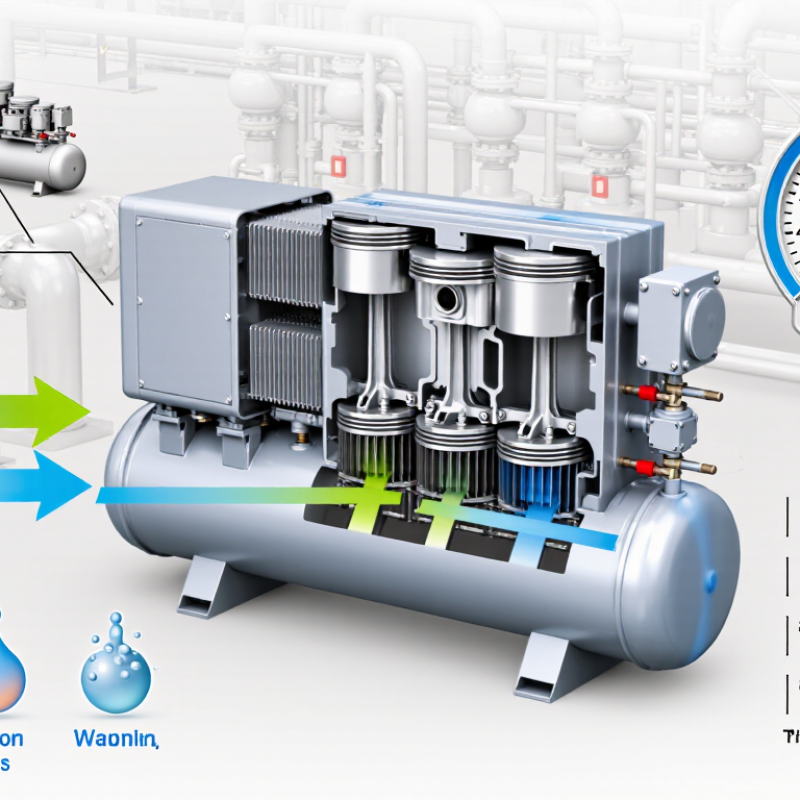
Define the Application and Operating Requirements
How to Choose the Right Reciprocating Compressor?
Define the Application and Operating Requirements
A reciprocating compressor should match the process, not just the required flow rate. Define the gas composition, suction pressure, discharge pressure, temperature, and expected flow range. Methane-rich gas, hydrogen, nitrogen, and wet process gas can create very different design demands. Check whether the compressor will run continuously, intermittently, or under frequent start-stop conditions. A unit operating beside a hot process line may need different cooling and materials than one installed indoors.
Review pressure changes across the complete operating cycle. Minimum suction pressure can affect capacity, while high discharge pressure increases rod load and power consumption. Confirm the required volume in actual inlet conditions, not only in standard units. This detail is often missed. It can distort sizing. Also examine gas cleanliness, liquid carryover, lubrication limits, noise requirements, altitude, and available cooling water. Industry guidance, such as API 618 for certain process applications, can support a disciplined specification, but site conditions still require engineering judgment.
Tips: Prepare a simple operating map with normal, minimum, and maximum conditions. Include start-up and upset cases. Ask whether the compressor can unload safely during low demand. Leave reasonable margin, but avoid excessive oversizing because it may cause inefficient cycling. I would also verify vibration limits, foundation strength, maintenance access, and spare-part availability before approving the design. A polished datasheet is not enough. Field reality can be less cooperative.
Compare Reciprocating Compressor Types and Configurations
Choosing a reciprocating compressor starts with the gas, pressure range, and operating pattern. A single-acting model compresses gas on one piston side. It can suit smaller duties and simpler packages. A double-acting model uses both sides of the piston. It usually delivers greater capacity within a similar frame size.
Configuration matters as much as compressor type. Single-stage compression may work for moderate pressure ratios. Multistage designs reduce the load on each cylinder and control discharge temperature. Intercoolers remove heat between stages. In a real installation, drain points and cooler access can affect maintenance time. A compact skid may save floor space, but tight piping can increase vibration and inspection difficulty.
Lubricated cylinders often provide strong sealing and long component life. However, oil carryover can damage sensitive downstream equipment. Oil-free or non-lubricated designs reduce contamination concerns. Their piston rings may need closer inspection, especially under dusty intake conditions. Diaphragm compressors offer excellent gas isolation for clean or hazardous process streams. Their flow is usually more limited. It is a trade-off.
I once treated capacity as the main selection factor. That was too narrow. Valve wear, pulsation, ambient temperature, and start-stop frequency also shape reliability. Ask for a pulsation study before finalizing the pipe layout. Check whether the selected frame handles future capacity changes. A compressor that fits today may become an expensive limitation later. Listen carefully during commissioning. Unusual knocks often deserve attention, not optimism.
Evaluate Capacity, Pressure, and Performance Specifications
Choosing the Right Reciprocating Compressor
Capacity, pressure, and performance specifications should guide every compressor decision. Capacity is usually measured as actual gas flow, such as cubic meters per minute. Start with the lowest, normal, and peak demand. A workshop may need 8 m³/min normally, but 11 m³/min during cleaning cycles. Selecting only for average demand can create pressure drops and unstable operation.
Pressure requirements need equal attention. Record the required discharge pressure, inlet pressure, and pressure losses through filters, valves, and piping. A compressor rated at 10 bar may deliver less at the equipment connection. Small details matter. Temperature also changes gas density and capacity. Ask for performance data at the real inlet temperature, altitude, and operating speed. Generic catalog figures can look impressive but remain difficult to compare.
Performance means more than capacity and pressure. Check power consumption, flow stability, discharge temperature, vibration, noise, and service intervals. In field inspections, a receiver tank that fills slowly often reveals an incorrect capacity estimate or hidden leakage. I have also seen calculations rely on ideal conditions that never existed on site. That mistake is easy to repeat. Compare test results with published specifications, and request clear tolerance ranges. Leave reasonable reserve capacity, but avoid excessive oversizing, which can increase cycling, energy use, and maintenance without improving production.
How to Choose the Right Reciprocating Compressor? - Evaluate Capacity, Pressure, and Performance Specifications
| Compressor Selection Profile | Air Delivery (m³/min) | Discharge Pressure (bar g) | Motor Rating (kW) | Operating Speed (rpm) | Compression Stages | Approx. Specific Power (kW per m³/min) | Typical Duty | Selection Notes |
|---|---|---|---|---|---|---|---|---|
| Small Workshop Utility | 0.35 | 8 | 3 | 850 | 1 | 8.6 | Intermittent | Suitable for hand tools, cleaning, and light pneumatic equipment. |
| General Workshop | 0.75 | 10 | 5.5 | 900 | 1 | 7.3 | Intermittent to moderate | A practical choice where demand varies during the workday. |
| Continuous Plant Air | 1.50 | 10 | 11 | 750 | 2 | 7.3 | Continuous | Two-stage compression helps reduce discharge temperature and improve efficiency. |
| High-Flow Manufacturing | 3.00 | 8 | 22 | 720 | 2 | 7.3 | Continuous | Allow for receiver storage and control capacity during peak demand. |
| High-Pressure Process Air | 1.00 | 25 | 15 | 600 | 2 | 15.0 | Continuous | Higher pressure increases power demand; verify valves, cooling, and piping ratings. |
| PET Preform Air | 2.00 | 40 | 45 | 500 | 3 | 22.5 | Continuous | Use staged compression, intercooling, and high-pressure air treatment. |
| Natural Gas Process Service | 5.00 | 35 | 90 | 450 | 3 | 18.0 | Continuous | Confirm gas composition, hazardous-area requirements, lubrication method, and pulsation control. |
| Very High-Pressure Gas | 0.60 | 100 | 37 | 400 | 4 | 61.7 | Intermittent to continuous | Prioritize pressure containment, cylinder clearance, cooling capacity, and safety instrumentation. |
Assess Materials, Reliability, Maintenance, and Safety Features
Choosing the right reciprocating compressor starts with the materials inside it. In practical equipment reviews, I examine cylinder liners, piston rings, valves, and connecting rods closely. These parts face pressure, heat, vibration, and repeated loading. Stainless alloys may resist corrosion, while cast materials can offer useful strength and damping. Material compatibility matters more than appearance.
Reliability depends on operating conditions, not only rated capacity. Check pressure range, gas composition, temperature, duty cycle, and expected starts per day. A compressor running near its limit may need stronger cooling and better vibration monitoring. I also look for oil filtration, automatic shutdowns, and accessible inspection points. Small design choices affect downtime. A blocked filter can become an expensive failure.
Maintenance should be practical for the technicians using it. Can they replace valves without removing half the machine? Are lubrication points visible and safely reachable? Maintenance records should track temperature, vibration, oil condition, and unusual noise. I once underestimated access time during a routine inspection, and the delay changed the service schedule. That mistake still matters. Safety features deserve equal attention, including pressure relief devices, guards, emergency stops, leak detection, and controlled venting. Verify each feature against applicable industry requirements and site procedures. Never assume a certificate replaces a physical inspection. The safest choice is often the compressor that technicians can understand, monitor, and repair consistently.
Select the Best Compressor for Total Lifecycle Value
How to Choose the Right Reciprocating Compressor?
Choosing a reciprocating compressor starts with the operating envelope, not the purchase price. Define gas composition, suction pressure, discharge pressure, flow range, temperature, and expected running hours. A compressor sized only for today may struggle when production changes. That mistake can create unstable operation and expensive modifications.
Calculate lifecycle value across energy, maintenance, downtime, spare parts, and disposal. Ask for tested efficiency data at your actual pressure ratio. Review cylinder capacity, rod load, valve life, lubrication needs, and pulsation control. During commissioning, record vibration, discharge temperature, oil consumption, and motor load. These readings create a useful baseline for future troubleshooting.
In the field, clean suction filters and correct valve clearances often protect performance more than complex software. Select components that technicians can inspect safely and replace without long delays. Confirm service support, documentation quality, training, and spare-part availability before approval. A lower-cost unit may lose its advantage after one unplanned shutdown. I have seen spreadsheets overlook crane access, winter heating, and technician travel. They should not. Even reliable estimates need review against real site conditions, historical maintenance records, and independent technical advice. Lifecycle value is not fixed; it changes with operating discipline, load variation, and the quality of decisions made after installation.