
Top 10 Heavy Lifting Equipment Suppliers Worldwide?
Choosing the world’s leading Heavy Lifting Equipment suppliers requires more than comparing crane sizes or catalogue prices. Buyers must examine lifting capacity, operating reach, control systems, service coverage, spare-parts access, and verified safety performance. A 500-ton crawler crane may look impressive, yet its real value depends on reliable assembly support and skilled maintenance.
Willi Liebherr, former president of Liebherr-International AG, once said, “We are not interested in short-term success. We want to build a company for generations.” That principle offers a useful lens for this ranking. Strong suppliers do not merely sell machines. They develop engineering expertise, operator training, digital monitoring, and long-term customer support.
This guide reviews ten prominent suppliers serving construction, ports, energy, shipyards, mining, and industrial projects worldwide. The comparison considers product depth, innovation, field experience, global presence, and documented reliability. It also recognizes that “best” depends on the lifting environment. A mobile crane suited to a city bridge project may fail the practical demands of an offshore installation.
Some rankings remain debatable.
That is unavoidable.
Market data changes, ownership structures shift, and regional service quality can differ sharply. A supplier with an excellent global reputation may still provide uneven local support. Therefore, readers should treat this list as a researched starting point, not a final purchasing decision. Site conditions, load charts, ground pressure, wind limits, certification requirements, and total lifecycle costs deserve careful review before equipment selection.
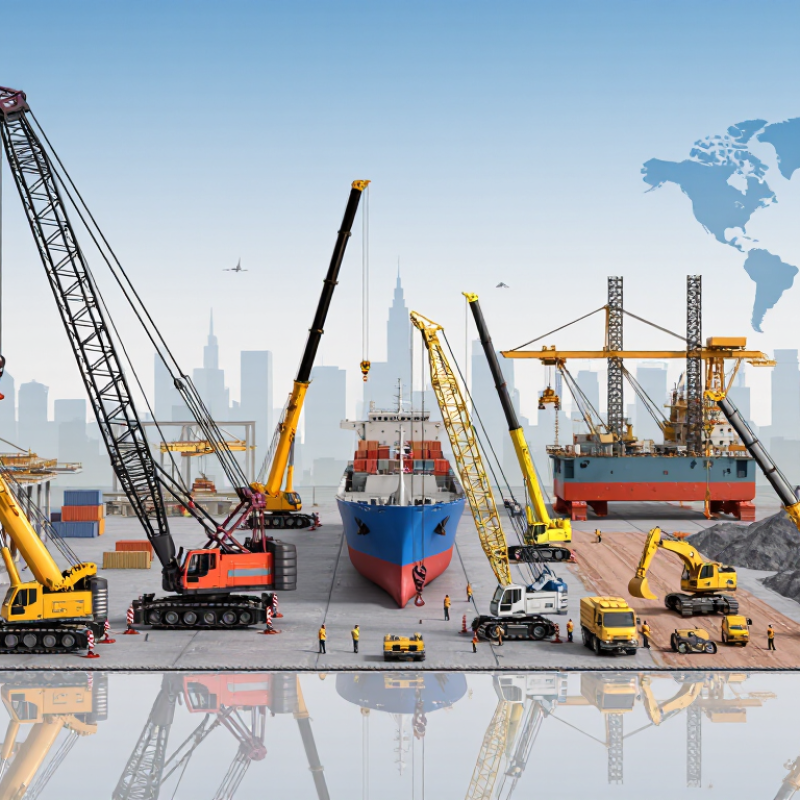
Defining Heavy-Lifting Equipment: Cranes Rated Above 100 t Under ISO 4306
Top 10 Heavy Lifting Equipment Suppliers Worldwide?
For this comparison, heavy-lifting equipment means cranes rated above 100 metric tonnes. However, ISO 4306 does not establish 100 tonnes as a universal threshold. It mainly defines crane terminology and classification principles. The 100-tonne line is therefore an editorial benchmark, not an ISO rule.
Rated capacity needs careful reading. A crane lifting 120 tonnes at a short radius may handle far less at 30 metres. Load charts, boom length, counterweight, ground pressure, wind limits, and configuration all matter. Crawler, mobile, tower, and gantry cranes should not be ranked by capacity alone. The boundary is useful, but imperfect.
Market demand supports closer scrutiny. The Global Wind Energy Council’s Global Wind Report 2024 recorded 117 GW of new wind capacity installed in 2023. The International Energy Agency’s Renewables 2024 report recorded about 510 GW of global renewable capacity additions that year. These projects require controlled lifting for nacelles, transformers, bridge sections, and heavy industrial modules. They are not crane-sales figures, but they indicate sustained demand.
A reliable supplier comparison should examine verified load testing, ISO 4306 terminology, operator training, spare-parts access, and documented service history.
Site experience matters too. One overlooked detail can change the result: wet soil may reduce effective lifting capacity. Even experienced teams sometimes rely too heavily on headline tonnage.
Ranking Criteria: KHL Yellow Table Revenue, Fleet Capacity, Safety, and Global Reach
Top 10 Heavy Lifting Equipment Suppliers Worldwide?
Ranking global heavy lifting equipment suppliers requires more than comparing annual sales. The KHL Yellow Table revenue provides a useful financial reference, but revenue alone can distort operational strength. A company may report impressive income while operating a limited or aging fleet. Fleet capacity shows whether suppliers can support major lifts, emergency replacements, and simultaneous projects across regions. Crane tonnage matters. So does equipment availability.
Safety deserves equal attention. Reliable suppliers document inspection schedules, operator training, load planning, and incident reporting. On a real project, a well-maintained crawler crane and a qualified crew can prevent costly delays. Look for clear lift plans, certified technicians, remote monitoring, and practical site controls. Safety claims should be supported by records, not polished language. Some rankings may still rely on incomplete public data.
Global reach adds another layer. Strong suppliers maintain service centers, spare parts, transport networks, and local technical teams near industrial ports, energy sites, and construction corridors. However, a large international footprint does not guarantee consistent service everywhere. Regional subcontractors may vary in experience and response time. Weather, customs procedures, road limits, and local regulations can reduce effective fleet capacity. A fair ranking should therefore combine KHL revenue, usable fleet size, safety performance, and verified geographic coverage. The method is imperfect. Transparent scoring makes its weaknesses easier to examine.
Top 10 Heavy Lifting Equipment Suppliers Worldwide
Anonymized ranking based on KHL Yellow Table 2023 construction-equipment revenue, with supplier identities withheld.
Revenue figures are rounded USD billions reported in the KHL Yellow Table 2023, which reflects construction-equipment sales for the preceding reporting period. The ranking is used as a transparent proxy for supplier scale, fleet capacity, operational resources, safety investment, and global reach.
Top 10 Suppliers: Liebherr, XCMG, Manitowoc, Tadano, SANY, and Others
The worldwide heavy lifting equipment market includes ten influential suppliers across Europe, Asia, and North America. Their fleets cover mobile cranes, crawler cranes, tower cranes, and specialized transport systems. Some suppliers excel in extreme lifting capacity. Others focus on compact machines, digital controls, or dependable rental support. Liebherr, XCMG, Manitowoc, Tadano, and SANY are widely recognized names in this field, alongside other established manufacturers. I would not treat any ranking as permanent. Project demands, regional service, and product availability can quickly change the result.
Tips: Compare rated capacity with the required working radius, not brochure figures alone. Check ground pressure, transport dimensions, operator visibility, and emergency systems. Ask for inspection records and maintenance response times. A strong dealer network can matter more than a slightly lower purchase price. Visit a working site if possible. Small details matter.
From practical project experience, reliable lifting begins with accurate planning. Wind limits, soil conditions, lifting charts, and local certification requirements deserve careful review. Telematics can improve maintenance decisions, but digital features cannot replace trained operators. That point is easy to overlook. Buyers should also examine spare-part access, warranty terms, technical training, and resale value. The best supplier is not always the largest one. It is the partner that provides safe equipment, clear documentation, and realistic support throughout the machine’s service life.
Top 10 Heavy Lifting Equipment Suppliers Worldwide
| Rank | Anonymous Supplier Profile | Main Equipment Coverage | Highest Published Lift Capacity |
Key Crane Type | Typical Boom / Mast Reach |
Primary Market Coverage | Common Applications |
|---|---|---|---|---|---|---|---|
| 01 | Profile A — Global Full-Line Specialist | Crawler, mobile, tower, port and construction cranes | 3,000 metric tons | Crawler crane | 100–120 m | Worldwide | Wind power, petrochemicals, bridges and major infrastructure |
| 02 | Profile B — Large-Scale Construction Equipment Group | Crawler, truck, rough-terrain and tower cranes | 4,000 metric tons | Crawler crane | 90–115 m | Asia, Europe, Africa and the Americas | Industrial construction, energy projects and civil engineering |
| 03 | Profile C — North American Heavy Crane Specialist | Crawler, lattice-boom, tower and mobile cranes | 2,300 metric tons | Lattice-boom crawler | 90–105 m | North America and selected global markets | Power plants, refineries, shipyards and infrastructure |
| 04 | Profile D — Japanese Mobile Crane Manufacturer | All-terrain, rough-terrain, truck and crawler cranes | 1,200 metric tons | All-terrain crane | 80–100 m | Asia, Europe, the Americas and Oceania | Urban construction, wind farms and plant maintenance |
| 05 | Profile E — Integrated Heavy Machinery Supplier | Crawler, mobile, truck-mounted and tower cranes | 2,000 metric tons | Crawler crane | 85–105 m | Worldwide, with strong Asian coverage | Large buildings, bridges, mining and energy infrastructure |
| 06 | Profile F — European Premium Crane Group | Mobile, crawler, tower and port cranes | 1,000 metric tons | All-terrain crane | 70–100 m | Europe, the Middle East and global projects | Wind turbine installation, industrial lifting and logistics |
| 07 | Profile G — Port and Material-Handling Specialist | Ship-to-shore, rubber-tyred, mobile harbor and portal cranes | 200 metric tons | Ship-to-shore crane | 40–55 m under spreader | Global ports and logistics hubs | Container terminals, bulk cargo and intermodal logistics |
| 08 | Profile H — Compact and Rough-Terrain Crane Supplier | Rough-terrain, truck, city and compact mobile cranes | 150 metric tons | Rough-terrain crane | 35–60 m | North America, Europe and Asia | Industrial sites, utilities, commercial construction and maintenance |
| 09 | Profile I — Telescopic Handler and Access Equipment Group | Telehandlers, heavy forklifts, aerial platforms and compact cranes | 45 metric tons | Heavy-duty telehandler | 20–35 m | Worldwide construction and rental markets | Construction sites, logistics yards, mining and agriculture |
| 10 | Profile J — Specialized Marine and Offshore Lifting Supplier | Offshore cranes, pedestal cranes, floating cranes and heavy-lift systems | 10,000 metric tons | Floating heavy-lift crane | 80–160 m | Offshore energy and marine markets | Offshore platforms, subsea projects, shipbuilding and decommissioning |
Capacity figures represent maximum published ratings for representative equipment classes and are not directly comparable across crane types. Actual lifting capacity depends on configuration, boom length, counterweight, radius, ground conditions and applicable safety standards.
Equipment Comparison: Mobile, Crawler, Tower, Port, and Overhead Cranes
Choosing the top 10 heavy lifting equipment suppliers worldwide requires more than checking catalog size. Equipment must match the worksite, load path, ground pressure, and maintenance capacity. Fortune Business Insights estimated the global crane market at about USD 33.6 billion in 2023, showing strong demand across construction, logistics, energy, and infrastructure. Yet market growth does not guarantee good equipment selection. Fit matters more.
Mobile cranes offer fast relocation and flexible road access. Crawler cranes provide better stability on soft ground, but transport planning becomes expensive. Tower cranes deliver height and reach on dense urban sites. Port cranes prioritize high cycle rates, corrosion protection, and container handling. Overhead cranes suit controlled factory environments, where precise positioning matters more than mobility. ISO 4301 classification helps compare duty cycles, while EN 13000 supports mobile crane safety assessment. These standards improve supplier comparisons, but they do not replace site experience. Not always.
A practical top-ten review should examine rated capacity, lifting radius, wind limits, spare-parts availability, operator training, inspection records, and digital load monitoring. The International Labour Organization repeatedly identifies weak planning and inadequate maintenance as major contributors to lifting accidents. One overlooked detail can stop a project: uneven soil, restricted turning space, or an underestimated duty cycle. Buyers should request independent test certificates and lifecycle cost estimates. Purchase price is only one part. Some comparisons still overvalue capacity and undervalue downtime, which deserves more scrutiny.
Industry Benchmarks: EN 13000, OSHA Rules, and ISO 12480 Lifting Standards
When comparing the top heavy lifting equipment suppliers worldwide, standards should guide the evaluation. EN 13000 addresses mobile crane design, stability, load charts, and safety controls. A credible supplier should provide clear technical files and traceable inspection records. Ask how rated capacity changes with boom length, radius, counterweight, and wind conditions. Small details matter.
OSHA rules set practical requirements for crane assembly, inspections, operator qualification, ground conditions, and power-line precautions in the United States. Suppliers should support site-specific lift planning, not merely deliver a machine. Look for readable load charts, emergency stop controls, outrigger guidance, and maintenance access. A competent person must still verify the worksite. Paperwork alone cannot control a shifting load.
ISO 12480-1 focuses on the safe use of cranes, including planning, operation, supervision, maintenance, and personnel responsibilities. It encourages documented lift plans, risk assessments, communication signals, and pre-use checks. In field reviews, a missing inspection tag or unclear hand signal can delay an otherwise simple lift. I have also seen teams trust standard templates too much. They should question ground bearing capacity, weather changes, and actual load weight. Compliance is not identical across countries, so buyers should confirm the applicable edition and local adoption before selecting equipment.
Related Posts
-
Overcoming Lifting Solutions Challenges: Insights and Data for Industry Professionals
-
7 Reasons Why Jib Crane Vacuum Lifters Enhance Efficiency in Material Handling
-
How to Find Top Lifting Supply Manufacturers in China?
-
How to Find the Best Lifting Supply Suppliers in China?
-
Innovative Lifting And Handling Equipment Solutions for Modern Warehousing Needs
-
The Evolution of Lifting Blocks in Global Supply Chains