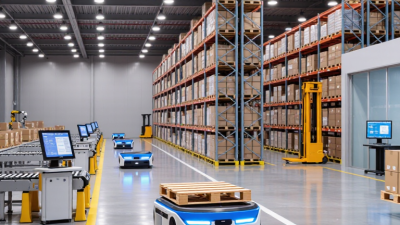
Top 10 Material Handling Products Every Buyer Should Know
Material Handling Products determine how safely and efficiently goods move through warehouses, factories, and distribution centers. The choices range from pallet jacks and conveyors to forklifts, lift tables, and automated storage systems. Each solves a different problem. A busy loading dock may need compact, maneuverable equipment; a high-bay warehouse may depend on reach trucks and carefully planned storage. The right purchase starts with the task, not the catalog.
The market is substantial. Grand View Research estimated the global material handling equipment market at about $219.7 billion in 2023 and projected continued growth through 2030. MHI’s 2024 Annual Industry Report also found that 55% of surveyed supply-chain professionals planned to increase technology investment. That figure reflects respondents’ intentions, not a guarantee that automation suits every operation. Fit matters more. A product’s rated capacity, travel distance, aisle width, floor condition, maintenance needs, and operator training all affect its real value. A polished specification sheet can still miss a daily bottleneck.
This guide introduces ten widely used product categories and explains what buyers should examine before choosing. It is not a universal ranking. A small warehouse may get more value from reliable pallet jacks than complex automation, while a high-volume facility may need both. Measure the work first. Then compare capacity, safety features, service support, and total operating cost. Even experienced buyers can overlook integration details; that deserves a second look.
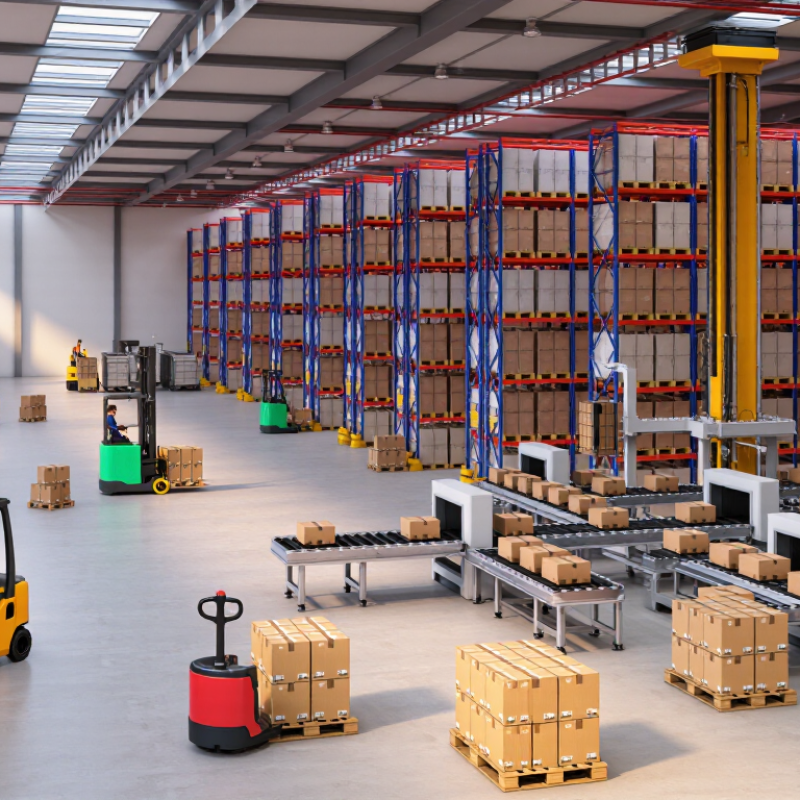
Material Handling Basics: Unit Loads and ISO 6780 Pallet Dimensions
Top 10 Material Handling Products Every Buyer Should Know
Material Handling Basics: Unit Loads and ISO 6780 Pallet Dimensions
A unit load combines goods into one moveable package, often secured on a pallet with stretch wrap or straps. It can reduce handling touches, but only when the pallet, cargo, and equipment work together. Small details matter. Cartons hanging beyond the deck can snag during travel or become unstable in a rack.
ISO 6780 identifies six principal pallet dimensions: 1200 × 1000 mm, 1200 × 800 mm, 1219 × 1016 mm, 1140 × 1140 mm, 1100 × 1100 mm, and 1067 × 1067 mm. The 1219 × 1016 mm size is commonly described as 48 × 40 inches. These dimensions help buyers compare systems across supply chains. Still, a listed size does not guarantee a pallet will suit every facility.
Check the pallet’s actual dimensions, fork-entry direction, and rated capacity against your racks, trucks, and load. Measure twice. A pallet may fit a conveyor yet leave too little clearance in a rack. ISO dimensions alone do not confirm load strength, deck condition, or compatibility with local equipment. Those checks take time, and they are easy to overlook when purchasing by size alone.
Top 10 Material Handling Products Every Buyer Should Know
Material Handling Basics: Unit Loads and ISO 6780 Pallet Dimensions
A unit load combines goods and handling equipment into one manageable load. This chart compares the footprint areas of six nominal pallet dimensions specified in ISO 6780. Areas are calculated from the listed length and width, converted to square metres, and rounded to three decimal places; they do not indicate load capacity.
Storage Products: Pallets, Shelving, and Racks Under ANSI MH16.1
Pallets, shelving, and racks do different jobs. Pallets carry unit loads; shelving suits hand-picked cartons and parts; racks use vertical space for palletized goods.
CBRE’s Q4 2024 U.S. Industrial & Logistics Figures report recorded a 6.7% national industrial vacancy rate. Efficient space planning still matters.
Aisle width, pallet overhang, and forklift turning room affect whether a layout works on a busy shift, not just on paper.
ANSI MH16.1-2023 sets design, testing, and utilization criteria for industrial steel storage racks. It does not certify every pallet or shelving unit.
Treat rack frames, beams, anchors, floor conditions, and stored loads as one system. Check capacity labels against the heaviest actual load, and have qualified professionals assess proposed changes or damage.
Small details matter.
A drawing can look tidy yet miss a protruding load or uneven floor; site conditions deserve a second look.
Inspect for bent uprights, loose connections, and impact damage, and keep damaged sections out of service until assessed.
Manual and Powered Movers: Carts, Pallet Trucks, and OSHA 1910.178
Top 10 Material Handling Products Every Buyer Should Know
Manual carts and pallet trucks suit short, controlled moves where powered equipment may be excessive. A loaded cart should roll smoothly over the actual floor, including expansion joints and tight turns. Check handle height, wheel material, load rating, and stopping control before buying. Manual pallet trucks also need enough fork length and clearance for the pallets in daily use. Small fit problems become daily delays.
Powered pallet trucks can reduce pushing effort, but they introduce traffic and training risks. OSHA’s 29 CFR 1910.178 covers powered industrial trucks, including operator training and workplace evaluation; it does not cover ordinary manual carts. OSHA has estimated that powered industrial truck incidents cause about 85 fatalities and 34,900 serious injuries each year. These figures are estimates, not a prediction for any one facility. Aisle width, blind corners, pedestrian routes, charging areas, and floor condition all matter. A truck that fits the load may still be wrong for the route.
Tips: Walk the route with a loaded unit before purchase. Test turning and stopping near real obstacles. For powered equipment, document training and evaluate operators as OSHA requires. Recheck after equipment or site changes. And ask workers what feels awkward. Their feedback can be inconvenient, but ignoring it is worse.
Conveyors and Hoists: Key Equipment and ASME B20.1 Safety Requirements
Conveyors and hoists move materials through busy facilities, but they present different hazards. A conveyor can pull clothing into a nip point or send a package sliding from a belt. A hoist can swing a suspended load across a work area. Buyers should consider the actual load, travel path, operating speed, and maintenance access before selecting equipment. Small details matter.
ASME B20.1 addresses the design, installation, inspection, maintenance, and operation of conveyors and related equipment. Buyers should check that conveyor guarding, controls, emergency stops, and warning devices suit the intended installation. Walk the route and look for pinch points near rollers, transfer areas, and drive components. Can workers reach an emergency stop quickly? A guard that is awkward to clean may be left open; that is a design problem, not merely a worker problem.
Hoists need separate attention. ASME B20.1 is not a general hoist standard; applicable ASME B30 requirements depend on hoist type and use. Confirm rated capacity, lifting height, duty cycle, mounting, and inspection needs with qualified personnel. Make sure operators can see the load path and keep people clear of suspended loads. Procedures may look tidy on paper. Real shifts are messier, so review them with the people who operate and maintain the equipment.
Automation and Selection: AGVs, Order Pickers, Dock Equipment, and Scales
Material handling decisions work best when they match the building, products, and daily workload. Automated guided vehicles can move pallets along repeatable routes, but they need clear paths, reliable handoff points, and space for turning. Before choosing a system, map busy crossings and measure aisle widths during actual operating hours. A route that looks clear on paper may be blocked by staging carts. Small details matter.
Order pickers help workers reach elevated locations and select individual items. Buyers should compare lift height, platform size, load capacity, and the time needed to recharge batteries. Match the equipment to the rack layout, not just the highest shelf. It is tempting to focus on speed; safe access and clear sightlines deserve equal attention. That trade-off is easy to underestimate.
Dock equipment affects both loading pace and the transition between a trailer and the warehouse floor. Check dock leveler capacity, trailer height variation, and the condition of seals and shelters. A worn seal can let in drafts and dust. Floor scales support shipping checks and inventory records, but placement matters: uneven floors or hurried weighing can undermine readings. I would not assume a new scale fixes a poor weighing routine. Observe how loads arrive, where they pause, and who records the weight before setting the scale location.
Related Posts
-
What Are the Top Material Handling Products for 2026?
-
Innovative Strategies for Effective Material Handling Products in Modern Warehousing
-
How to Choose the Best Jib Crane Vacuum Lifter?
-
What You Need to Know About Lifting and Handling Equipment Trends in 2023
-

Harness the Future: Discover Innovative Material Lifts at the 2025 Canton Fair
-
Unlocking Efficiency in Logistics with the Best Lifting and Handling Equipment Techniques