
What Are the Top Residual Circuit Breaker Types in 2026?
Choosing a Residual Circuit Breaker in 2026 is not just a matter of comparing prices or pole counts. The device must suit the installation, the connected loads, and the residual-current waveforms it may encounter. Type AC, A, F, and B devices are designed for different conditions; the wrong assumption can leave a protection gap. Small details matter, including inverter-driven equipment, electronic power supplies, and the rating printed on the breaker’s front.
The National Fire Protection Association’s Home Electrical Fires report estimated an average of 24,200 U.S. home fires involving electrical distribution or lighting equipment each year from 2015 to 2019. It also estimated 295 deaths and $1.2 billion in direct property damage annually. These figures describe electrical fires broadly, not the performance of residual-current devices. That distinction matters. IEC 61008-1 and IEC 61009-1 provide relevant product requirements for RCCBs and RCBOs, while IEC 60364-4-41 addresses protection against electric shock in installations.
There is no verified expert quotation in the material provided, so I will not invent one or attach words to a named specialist. The practical takeaway is straightforward: match the breaker type to the expected fault current and equipment, then verify the selection against current standards and installation guidance. Labels can still confuse, and real installations are rarely as tidy as a comparison chart suggests. That is worth remembering.
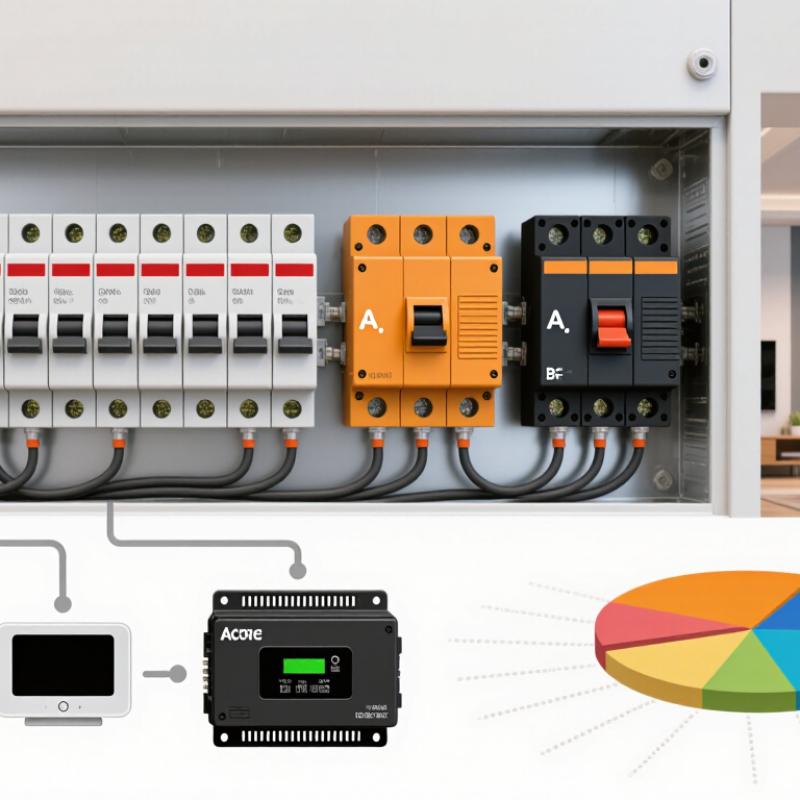
Understanding Residual Circuit Breakers and Their Protective Role
Residual circuit breakers monitor the difference between current flowing out and returning. If leakage travels through a person or a damp wall, the imbalance can trigger disconnection. A residual-current circuit breaker with overcurrent protection also responds to overloads and short circuits; a residual-current-only device needs separate overcurrent protection. Small distinction. Important on a crowded distribution board.
Type AC responds to sinusoidal alternating residual current.
Type A also detects pulsating direct current, common in circuits supplying electronic equipment.
Type F is designed for certain mixed-frequency loads, while Type B covers smooth direct current and broader frequency ranges.
The right choice depends on the equipment and installation, not a “best type” label. IEC 60755 provides general requirements for residual-current-operated protective devices, but local installation rules and manufacturer instructions still matter.
The protective role is substantial, though not magical. The National Fire Protection Association estimated an average of 24,200 U.S. home structure fires involving electrical failure or malfunction each year from 2015 to 2019, causing 295 civilian deaths annually. These figures describe electrical fires, not incidents that residual breakers could necessarily have prevented.
A breaker cannot repair damaged insulation or replace sound wiring. Test devices as instructed, and have a qualified professional assess nuisance tripping; repeatedly resetting one without finding the cause is a poor fix.
How Residual Circuit Breakers Detect Leakage Currents
A residual circuit breaker detects leakage by comparing the current leaving through the live conductor with the current returning through neutral. Both pass through a sensing core, usually a small toroidal transformer. In a healthy circuit, their magnetic effects cancel. If current escapes through a damaged cable or a person to earth, the balance changes. A secondary winding signals the trip mechanism once the residual current reaches its rated threshold. That difference matters.
Common types respond to different current waveforms. Type AC detects sinusoidal alternating leakage; Type A also responds to pulsating direct current. Type F suits some single-phase equipment with variable-speed controls, while Type B can detect smooth direct current and broader frequency patterns. Selection depends on the connected load, not simply on which type sounds most advanced. An RCCB detects residual current but generally does not provide overload protection; an RCBO combines both functions. Actual requirements vary by installation.
Tips: Check the device rating and circuit diagram before replacing a breaker. Test its button at the interval stated in its instructions, but remember that a button test does not prove the whole installation is safe. For circuits with inverters or electronic drives, confirm compatibility with a qualified electrician. It is easy to overlook waveform details.
Comparing AC, A, F, B, and Selective Types
What Are the Top Residual Circuit Breaker Types in 2026?
Comparing AC, A, F, B, and Selective Types
Choosing a residual circuit breaker starts with the current a fault may produce. Type AC detects sinusoidal alternating residual current, common in simple resistive circuits. Type A also detects pulsating direct current, making it a more suitable choice for many electronic appliances. Type F is designed for certain single-phase variable-speed equipment, such as inverter-driven appliances. Type B covers a wider range, including smooth direct residual current and some three-phase applications. That matters. IEC 62423 specifies requirements for Type F and Type B devices; the installation design still determines the correct rating and placement.
Selective, or Type S, describes a delayed tripping characteristic rather than a separate current-waveform class. An upstream Type S device can help coordinate with faster downstream protection, reducing the chance that one fault shuts off an entire installation. But coordination must be verified against manufacturer-independent device ratings and the applicable wiring design. It is not a universal fix. NFPA’s report on U.S. home fires involving electrical failure or malfunction estimates an average of 46,700 such fires annually in 2015–2019, with about 390 civilian deaths and $1.5 billion in direct property damage. Those figures cover many electrical failures, not breaker performance alone. Treat them as context, not proof that one type prevents every incident. A qualified electrician should check the equipment, expected fault currents, and local requirements before selection.
| Type | Residual current detection | Typical applications | Key considerations |
|---|---|---|---|
| Type AC | Detects sinusoidal alternating residual current. | Simple circuits with steady AC loads, where local regulations permit this type. | Not designed to detect pulsating DC residual current or smooth DC. It may be unsuitable for circuits supplying electronic equipment that can produce these waveforms. |
| Type A | Detects sinusoidal AC and pulsating DC residual current. | Common household and commercial circuits with electronic loads, such as many appliances and lighting controls. | Does not provide the same smooth-DC detection capability as Type B. Check the equipment instructions and applicable electrical rules. |
| Type F | Includes Type A detection and is designed for certain composite-frequency residual currents. | Some single-phase variable-speed appliances, such as inverter-controlled equipment, when specified by the manufacturer. | Offers broader frequency-related detection than Type A, but is not a general substitute for Type B where smooth DC residual current may occur. |
| Type B | Detects AC, pulsating DC, smooth DC, and specified composite-frequency residual currents. | Equipment that can generate smooth DC residual current, such as some three-phase drives, charging systems, or photovoltaic installations, when required by design or standards. | Choose based on the equipment manufacturer’s requirements and the installation design. It is generally intended for a wider range of residual-current waveforms than Types AC, A, or F. |
| Selective (Type S) | A time-delayed, selective characteristic for coordination; it is not a separate waveform-detection category. | Often used upstream of downstream residual-current devices to improve selectivity in multi-level installations. | Confirm the upstream device’s waveform type and coordination requirements. Time delay and sensitivity must be selected in accordance with applicable rules and the installation design. |
Note: Device selection depends on the load, possible residual-current waveforms, installation design, manufacturer instructions, and local regulations. A selective device can also have a waveform-detection classification, such as Type A or Type B.
Matching Breaker Types to Electrical Applications
Matching a residual circuit breaker to an application starts with the leakage-current waveform, not just the appliance label. Type AC responds to sinusoidal alternating leakage and may suit simple loads without electronic rectification. Type A also detects pulsating direct-current leakage, found in many washing machines, induction hobs, and switched-mode power supplies. Check the equipment manual.
Type F is often considered for single-phase inverter-driven equipment, such as heat pumps, when specified by the manufacturer. Type B detects smooth DC residual current and is used in some EV charging, solar, and industrial systems. These types are not interchangeable. Confirm the required sensitivity, pole count, built-in DC monitoring, and upstream protection with a qualified electrician.
Tips: Match the breaker to the actual load and installation, not a broad appliance category. Small details matter. Selection charts can make this look simpler than it is; real installations sometimes combine loads with different leakage characteristics. When specifications are unclear, pause and get the circuit assessed before choosing a device.
Choosing a Residual Circuit Breaker for 2026 Installations
Choosing a residual circuit breaker starts with the equipment, not the label. Type AC detects sinusoidal alternating residual current; Type A also detects pulsating direct current. For washing machines, induction hobs, and other electronic loads, Type A is often a more suitable starting point. Type F can suit certain single-phase variable-speed equipment, while Type B is designed for smooth direct-current residual faults from some inverters and charging systems. Check the appliance instructions and local design requirements.
The risk is practical. NFPA’s Home Electrical Fires report estimates that U.S. homes experienced an average of 32,620 fires involving electrical distribution or lighting equipment each year from 2015 to 2019. Those incidents caused about 430 deaths annually. These figures do not show that residual breakers would have prevented the fires, but they underline why protection should match the installation. Fit the breaker’s rated current, residual operating current, and trip characteristics to the circuit, and verify coordination with upstream devices.
Small details matter. A 30 mA device is commonly used for additional protection, but it is not a universal design answer. Confirm the expected leakage current, earthing arrangement, and compatibility with connected equipment. Test after installation. Record the device type and circuit served; labels fade, and memory is unreliable. One awkward truth: even a correctly selected breaker cannot compensate for poor connections or neglected inspection.
What Are the Top Residual Circuit Breaker Types in 2026?
Waveform coverage by RCD type for choosing protection in 2026 installations
The bars count waveform families addressed by each IEC RCD type: sinusoidal AC, pulsating DC, composite or mixed-frequency currents, and smooth DC. Type F is designed for composite currents and can tolerate limited smooth DC; Type B additionally detects smooth DC. This is a scope comparison, not a safety ranking or a market-share chart. Select a device to suit the installation, applicable regulations, and equipment manufacturer’s requirements.