What Are the Top Types of Pallet Boxes?
Choosing the right pallet box can reshape how goods move through a warehouse, truck, and production line. These containers protect products, reduce handling time, and support cleaner inventory control. Yet “top” depends on the load, storage system, and operating environment. A rigid plastic Pallet Box may suit wet rooms, while a collapsible model saves return-transport space. Heavy machinery often needs reinforced walls and stable runners. Fresh produce needs ventilation. Each detail matters.
In real facilities, selection rarely follows a catalogue photograph. A box that stacks neatly when empty may become difficult to move when fully loaded. Likewise, a lightweight design can lower purchase costs but suffer under repeated impacts. Material choice, base construction, lid fit, and forklift access deserve close inspection. Operators should test samples with actual products. Small trials reveal awkward corners, unstable loads, and cleaning problems before full deployment. Reliable recommendations should combine manufacturer specifications with warehouse experience and maintenance records. Still, no container solves every handling challenge. Some options demand higher upfront investment. Others need careful loading discipline. This overview compares common pallet box categories, helping readers match each design with a realistic application. That process may expose compromises. Good decisions usually do.
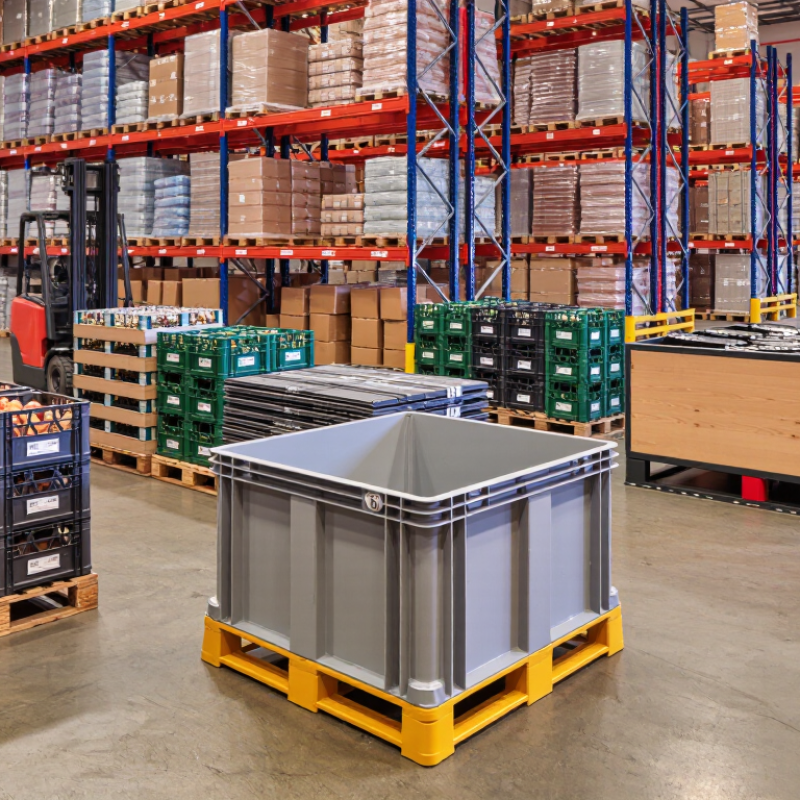
Pallet Box Basics and Their Role in Material Handling
What Are the Top Types of Pallet Boxes?
Pallet Box Basics and Their Role in Material Handling
Pallet boxes are large containers designed to move, protect, and store goods on standard pallets. Their value begins with stability, not appearance. A suitable box keeps contents contained during forklift travel, rack placement, and temporary storage. Common types include rigid plastic boxes, collapsible plastic boxes, wire-mesh boxes, and heavy-duty steel boxes. Each suits different handling conditions. Rigid plastic models resist moisture and clean easily, making them practical for repeated warehouse cycles. Collapsible versions save return-transport space when empty, though hinges and panels need regular checks.
Wire-mesh boxes improve visibility and airflow around dense parts or packaged materials. They also reveal missing contents quickly. Steel boxes handle demanding loads, but their weight can increase labor and equipment costs. Material choice should follow the load, environment, and handling method. Measure the pallet footprint, usable height, entry points, and maximum safe load before purchasing. Do not judge capacity by volume alone. A tall box may hold more, yet become unstable if the load shifts.
In warehouse trials, I have found that access matters as much as strength. Forklift pockets should align cleanly, while doors or drop sides should open without forcing. Inspect cracked walls, bent frames, damaged hinges, and unreadable load labels before each active cycle. A damaged box is not merely untidy. It can change weight distribution and create handling risk. My earlier mistake was choosing the most durable container without considering empty storage space. That decision worked for protection, but wasted valuable floor area.
How to Choose a Pallet Box for Products, Storage, and Transport
Pallet boxes usually fall into three practical types: corrugated fiberboard, reusable plastic, and heavy-duty metal. The right choice depends on the product, storage period, and transport conditions. Corrugated boxes suit dry goods and shorter routes because they are light, printable, and recyclable. Plastic boxes resist moisture, repeated handling, and cold rooms. Metal boxes support dense, heavy loads, but they cost more and require careful handling.
Product protection comes first. Measure the product, then leave only enough clearance for padding and movement. An oversized box wastes space and may collapse under stacking pressure. Check the pallet footprint, forklift entry, lid design, and safe working load. For wet or chilled goods, plastic is usually safer than untreated fiberboard. For fragile parts, internal dividers matter more than thicker walls. Small details matter.
Storage and transport create different demands. A nesting plastic box can save warehouse space when empty, while a collapsible model can reduce return-trip volume. The World Bank’s What a Waste 2.0 report estimates 2.01 billion tonnes of municipal solid waste are generated worldwide each year. Reusable packaging deserves attention, but reuse is not automatically better. Washing, repair, and reverse logistics may add cost and emissions. The U.S. Environmental Protection Agency reported that containers and packaging represented 28.1% of U.S. municipal solid waste generation in 2018. That figure supports better design, not careless substitution. I would test a sample box through stacking, vibration, moisture, and repeated forklift handling. One test is never enough. Pallet boxes can fail at corners first.
Key Features That Affect Pallet Box Performance and Cost
Pallet boxes come in several practical forms: rigid plastic, collapsible plastic, corrugated fiberboard, and timber. Each type suits a different handling environment. Rigid plastic boxes provide strong protection for dense parts and repeated warehouse use. Collapsible designs save space when returned empty. Corrugated boxes are lighter and often cheaper for one-way shipments. Timber boxes handle heavy, irregular loads, but they usually require more storage space and maintenance.
Key features strongly affect both performance and cost. Load capacity depends on wall thickness, base construction, and how weight is distributed. A reinforced base can prevent distortion under stacked boxes. Ventilation holes protect fresh goods, yet they may reduce side strength. Smooth inner walls make cleaning easier. Hinged lids improve security, but add weight and replacement costs. Forklift entry points should be clearly designed. Poor alignment can damage the box during busy loading cycles. Nesting or folding features reduce return freight, although hinges may wear sooner than expected. This is where specifications need honest testing, not assumptions.
Tips: Match the box to the product, route, and handling frequency. Test a loaded sample on the actual pallet. Measure stack height and empty-return volume. Ask suppliers about repair parts, cleaning limits, and expected service life. A low purchase price can become expensive after repeated failures. Still, no design is perfect. A stronger box may cost more upfront, while a lighter one may lower transport emissions and labor effort. Evaluate the complete operating cycle before choosing.