What Is the Best Lift Company in China?
Choosing the best Lift Company in China is less about finding a single famous name and more about matching a supplier to a building’s needs. A residential tower, hospital, and metro station place very different demands on lift speed, capacity, accessibility, and maintenance. No ranking settles it.
Scale matters, but it is not proof of quality. China’s National Bureau of Statistics reported elevator output of about 1.55 million units in 2023, a figure that illustrates the market’s size—not the performance of any individual manufacturer. China Elevator Association industry reporting also provides useful context on production, technology, and market trends. Buyers should compare these sources with project-level evidence: verified installation records, clear safety documentation, parts availability, and measurable maintenance response times. Ask for references from buildings with similar traffic and operating conditions.
Look closely at the details. Can the supplier explain its control system, energy use, and planned servicing in plain language? Are replacement parts available locally, and who handles faults after handover? A polished brochure cannot answer those questions. Even an established company can disappoint when installation coordination or after-sales service is weak. That comparison is useful, but incomplete: performance depends on the building, local service team, and years of upkeep. The strongest choice is usually the Lift Company that can support its claims with relevant project evidence and a practical, transparent service plan—not simply the largest catalogue.
How China’s Lift Industry Is Structured
China’s lift industry is not a single market led by one kind of company. It is a chain connecting equipment manufacturers, component suppliers, installation contractors, maintenance teams, property managers, and regulators. Each group affects reliability in a different way. A carefully assembled lift still depends on installation quality and steady maintenance.
The scale is substantial. China’s State Administration for Market Regulation reported 10.016 million lifts in service at the end of 2023 in its National Special Equipment Safety Status Bulletin. The National Bureau of Statistics recorded an urbanization rate of 66.16% that year. These figures describe a large installed base and continuing urban demand, but they do not show which supplier performs best. That distinction matters. Installed stock is not the same as annual sales.
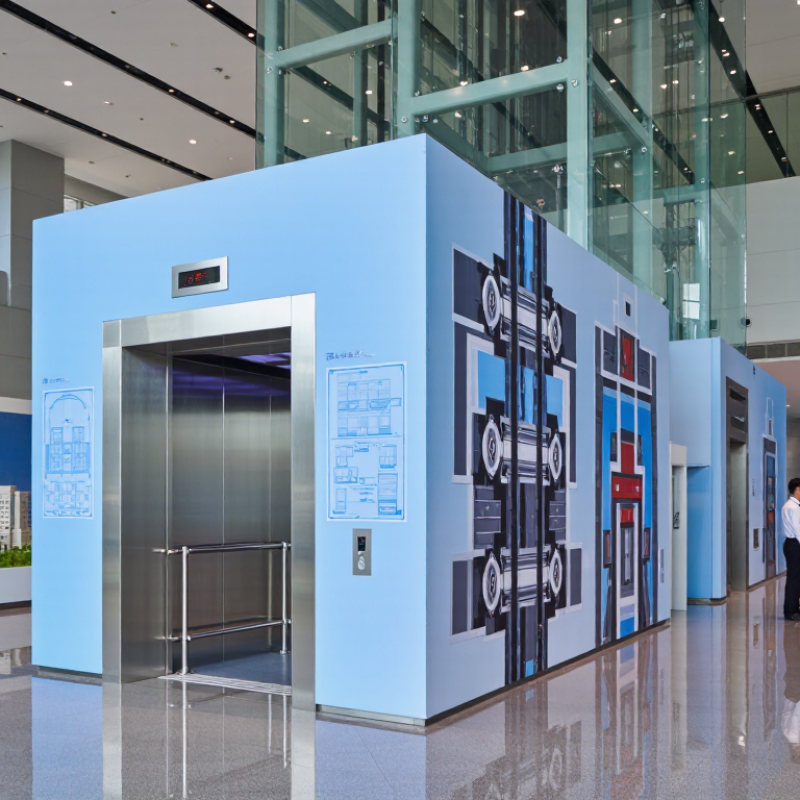
In a real building, the industry structure becomes visible at the landing door, in the machine room, and in a maintenance log. Manufacturers provide the main equipment; installation teams fit and test it; maintenance providers handle inspections, adjustments, and breakdowns. Property owners coordinate access and budgets, while regulators set safety requirements. Buyers should compare service coverage, spare-parts availability, response procedures, and documented maintenance—not just specifications. The chain can be hard to judge from a brochure. That is an imperfect part of the market.
What Criteria Define the Best Lift Company
What Is the Best Lift Company in China?
What Criteria Define the Best Lift Company
A strong lift company is defined by safe design, dependable performance, and service after installation. China’s State Administration for Market Regulation reported about 10.17 million elevators in use at the end of 2023, in its National Special Equipment Safety Status report. That scale makes maintenance capacity important: buyers should ask how quickly technicians can respond and whether spare parts are available locally. A polished showroom tells you little. Service records tell you more.
Check compliance documentation, inspection procedures, and the company’s experience with your building type. Compare energy use, ride comfort, noise, accessibility, and the availability of remote fault monitoring. Ask for measurable service commitments, such as response times and planned maintenance intervals. ISO 25745 provides methods for assessing lift energy performance, so comparable estimates are more useful than broad efficiency claims. Still, even good data can miss the realities of an older building. Ask how assumptions were calculated.
Tips: Request references for similar projects, review maintenance logs, and get the proposed service scope in writing. Look beyond the purchase price. A cheaper lift may cost more if downtime, parts delays, or unclear maintenance responsibilities disrupt daily use.
Which Chinese Lift Manufacturers Lead the Market
China’s lift manufacturers lead the market in different ways, so there is no single best choice for every building. Strong contenders typically combine large-scale production with engineering teams that adapt equipment to local building conditions. Their capabilities may include passenger lifts, freight lifts, escalators, and modernization systems. Scale matters, but it does not guarantee consistent service.
For a fair comparison, examine rated load, travel speed, energy use, and performance under expected traffic. Ask for test records, maintenance intervals, spare-parts availability, and references from buildings with similar height and usage. A busy hospital has different demands from a small apartment block. Service coverage can matter as much as the lift itself. That detail is easy to overlook. Published specifications also cannot tell the whole story; installation quality and follow-up support affect real-world performance.
Tips: Request a sample maintenance schedule and a clear breakdown of response times. Compare lifecycle costs, not just the purchase price. Check whether technical documents match the proposed configuration. If a supplier cannot explain a specification plainly, ask again. Procurement reviews can miss practical details, and even a careful shortlist may need revision after a site inspection.
How Major Lift Companies Compare in Technology and Service
What Is the Best Lift Company in China?
How Major Lift Companies Compare in Technology and Service
Choosing a lift company is not just a question of speed or cabin design. Compare drive efficiency, ride smoothness, fault detection, and the availability of replacement parts. China’s State Administration for Market Regulation reported 9.649 million elevators in service at the end of 2022. That large installed base makes dependable maintenance a practical measure of quality, not an optional extra.
Technology claims deserve close checking. Ask whether remote monitoring identifies specific faults, such as repeated door-opening errors, or only sends a general alert. Request service records showing response times, repeat breakdowns, and parts delays. The International Organization for Standardization’s ISO 25745 series provides methods for assessing lift energy performance, but energy ratings alone do not show how quickly a local team can restore service. A smart dashboard can look impressive. It may still miss a worn door roller.
Tips: Compare proposals for the same building and traffic pattern. Ask for a sample maintenance log and named response targets. Check these against references from nearby buildings; glossy slides are not evidence. A little skepticism helps.
How to Choose a Lift Company for a Specific Project
What Is the Best Lift Company in China?
How to Choose a Lift Company for a Specific Project
Choosing a lift company in China starts with the building, not a popularity list. A residential tower, hospital, and small factory place different demands on capacity, speed, door width, and controls. Record peak traffic, floor count, shaft dimensions, expected loads, and local climate before requesting proposals. These details make comparisons more useful.
Ask each bidder to explain how its lift fits the site. Request layout drawings, load and speed data, energy estimates, installation schedules, and a clear scope for civil works. Check whether the engineering team has handled similar buildings. Speak with project references if possible, and ask who will supervise installation and train maintenance staff. Ask for proof. A low price can hide exclusions, including wiring, testing, or later service visits. Compare full lifecycle costs, not just the headline figure.
After-sales support deserves close attention. Confirm spare-parts availability, response times, maintenance records, and how faults are escalated. Visit an operating installation when practical. Listen for door noise, observe leveling at each floor, and review service logs. Keep questions in writing, and have a qualified local engineer assess technical claims. A polished presentation is not evidence. Sometimes a detailed proposal still leaves gaps; flagging them early may slow the decision, but it can prevent costly misunderstandings later.